

Canopy Load Tuning for Stronger Trees This Summer
Key Takeaways About Canopy Load Tuning
Canopy load tuning means selectively adjusting branches to balance a tree’s crown and reduce dangerous lever forces. This guidance helps homeowners and property managers prepare and act before peak summer growth and storm seasons.
- Identify long lateral limbs that create excessive leverage on the trunk.
- Prevent bark separation by addressing weak crotches and decay early.
- Avoid removing more than twenty five percent of live foliage at once.
- Spot leaning trunks cracks or recent partial failures that need urgent review.
- Reduce wind sail by thinning heavy outer foliage and crossing branches.
- Plan staged cuts and follow up inspections to maintain structural balance.
Introduction
Canopy load tuning focuses on how a tree’s branches and leaves distribute weight through the crown. Uneven weight creates long levers that stress trunks and roots during wind, storms, and rapid summer growth. Homeowners often notice one-sided crowns, leaning trunks, or branches rubbing together. Those visible signs can point to deeper structural imbalance that increases failure risk.
When a canopy is unbalanced, forces concentrate at attachment points and weak crotches. Over time those stresses can open decay pockets or split bark, making failure more likely. Properties in Fort Worth, TX with mature trees are especially vulnerable during strong seasonal storms. Addressing load distribution helps reduce sudden branch or limb loss near homes.
Balanced canopies also promote healthier energy use and target growth where trees need support. Instead of heavy outer limbs pulling the crown outward, selective adjustments shift load back toward the trunk. Landscapers and arborists look for long lever arms and oversized scaffold limbs when assessing risk. Those observations guide smarter pruning choices to improve resilience.
Professional diagnosis combines a visual inspection, measured limb lengths, and an assessment of attachment strength and decay. Photos, recorded footage, and notes on recent branch failures help form a clear picture. For properties in Mansfield, TX with frequent new growth, timely attention prevents more costly damage later. If you see major splits, large dead limbs, or persistent leaning, contact a qualified arborist for a safety-focused evaluation.
How Canopy Load Tuning Works And Why It Happens
Canopy load tuning is the deliberate assessment and selective removal of branches to rebalance a tree’s crown and reduce lever forces. Professionals start by mapping load paths from major limbs back to the trunk to see where forces concentrate. They measure limb lengths and note attachment angles to estimate bending loads and leverage. Homeowners often ask whether trimming will change tree health, selective cuts usually improve resilience without harming vitality when done correctly.
- Measure long lateral limbs for lever length
- Note included bark or weak crotches
- Check for decay near attachments
- Assess root plate stability
- Observe crown symmetry from multiple angles
Cut choices aim to shorten or remove long levers while keeping enough foliage for photosynthesis. Arborists prefer thinning cuts and reduction cuts over topping, which creates new weak growth. A reduction cut shortens a limb back to a lateral branch that can carry weight, lowering the lever arm and bending stress. This process reduces the chance of failures during storms and heavy summer leaf loads.
Diagnosis often combines simple tools and clear observations to confirm imbalance and risk. A measuring tape and camera help record limb lengths and attachment conditions during inspection. Professionals also use sounding with a mallet to detect decay and may test branch movement visually during wind to see how load transfers. If you notice large cracks or recent partial failures, those are urgent signs that a formal diagnosis is needed.
When work is needed, a plan lists target limbs, cut type, and follow-up care to avoid creating new stress points. For complex structural edits, many teams document proposed changes with photos and notes before cutting. You can read an example scope for those kinds of edits on the structural canopy edits page to see typical approaches. Homeowners in Fort Worth, TX and Mansfield, TX often schedule such plans before peak growth to prevent mid-summer problems.
Signs Your Tree Has Unbalanced Weight Distribution
Look for heavy outer limbs that create a pendulum effect when the wind blows. A limb that moves more than its neighbors can indicate disproportionate lever forces and higher stress at the attachment. Watch for branches that consistently trail leaves or fruit to one side after wind events, they may be carrying extra seasonal load. Photograph movement during a storm or a windy day to document which limbs swing furthest and most often.
Unequal leaf density across the crown often signals unbalanced weight distribution rather than poor health. One side with dense foliage and long laterals will pull the crown off-center and increase bending moments at scaffold attachments. Inspect where major limbs connect to the trunk for bark separation or stretched bark tissue, which suggests repeated loading. If you find visible bark gaps or peeled bark at attachments, this is a clear warning sign to act.
Recurring rubbing between branches or persistent branch crowding increases the chance of weak wounds and decay pockets. Rubbing wounds may let moisture and fungi enter, weakening the attachment over time and changing how loads transfer. A professional will often perform a simple diagnostic by measuring limb length, photographing attachment angles, and sounding suspect wood with a mallet. Homeowners can compare those photos to a reference visit from a specialist to track progression and timing for cuts.
Sudden shifts in leafing patterns after storm events can reveal hidden structural problems needing correction. In a common situation, a homeowner notices a once-straight limb leaning after heavy rain and calls for inspection, an arborist then checks root plate stability and tests for internal decay. If major branches show reduced spring bud-out on one side, the tree may redirect growth and increase lever stress elsewhere. For targeted interventions, see guidance on branch weight balancing and consider the long-term advantages explained in advanced tree canopy management benefits, especially for properties in Fort Worth, TX and Mansfield, TX.
Common Causes Of Excess Canopy Lever Forces
Storm history often explains excess canopy lever forces because repeated gusts pry long limbs outward and widen weak attachments over time. Soil compaction next to roots reduces anchorage and lets heavy lateral limbs create larger bending moments at the trunk. Poor initial pruning, like leaving competing scaffold branches, can concentrate weight on a few long arms rather than distributing it. In Fort Worth, TX properties with mature trees, these factors combine and increase the chance of partial failures during peak growth.
Species growth habit also plays a major role, some trees naturally produce long, flexible laterals that act as heavy levers when fully leafed. Epicormic shoots or vigorous water sprouts add mass far from the trunk and increase leverage without improving structural support. Crown thinning that targets those fast-growing shoots can reduce weight but must be planned to avoid over-thinning. Homeowners can watch for sudden flushes of sprouting after pruning, which may change where loads concentrate next season.
Previous storm damage or healed wounds sometimes hide internal decay that weakens attachment points while leaving outward limb mass intact. Wood decay near crotches reduces the material available to resist bending, increasing lever force effects under load. A professional will often sound suspect areas with a mallet and inspect for softened wood and hollow sections near major attachments. For managing oversized laterals with weak attachments, consider approaches like subordination cuts to shift weight to stronger branches.
Construction impacts to the root zone and uneven soil moisture encourage one-sided root growth, which limits support where heavy limbs load the crown. Root loss from excavation reduces the root plate area that resists overturning, making long laterals more hazardous as levers. A diagnostic check includes probing soil moisture, inspecting root exposure, and comparing lean direction with root damage signs. In Mansfield, TX properties, nearby landscaping changes often precede shifts in canopy balance and deserve early inspection.
Simple Trimming Cuts To Reduce Lever Stress
Start with targeted reduction cuts on the longest laterals to shorten lever length and shift load inward toward stronger wood. Make each cut back to a healthy lateral at least one-third the diameter of the cut limb. Use three-cut technique on larger limbs to prevent bark tearing and preserve the remaining attachment. When done correctly, these cuts reduce bending stress without creating large wounds that decay quickly.
- Remove small crowded shoots at their base.
- Reduce long laterals to a strong subordinate branch.
- Cut crossing or rubbing branches to stop future wounds.
- Thin heavy outer foliage to lower wind sail area.
Thinning cuts help by removing entire branches at their origin to open the crown and reduce wind resistance. Make selective removals evenly around the crown to avoid creating a new one-sided condition. Avoid removing more than 25 percent of live foliage in a single season to protect tree health. If uncertainty exists, plan staged cuts across multiple seasons to gradually rebalance the canopy.
End-weight relief cuts shorten terminal growth and limit heavy tips that act as levers during storms. Choose distal cuts that preserve lateral branches close to the trunk to carry redirected load, and document changes with photos. Homeowners in Fort Worth, TX often notice immediate reduction in limb sway after these adjustments. For larger structural work, consider a professional assessment for safety and long-term balance on properties in Mansfield, TX.
When To Call A Professional For Canopy Load Tuning
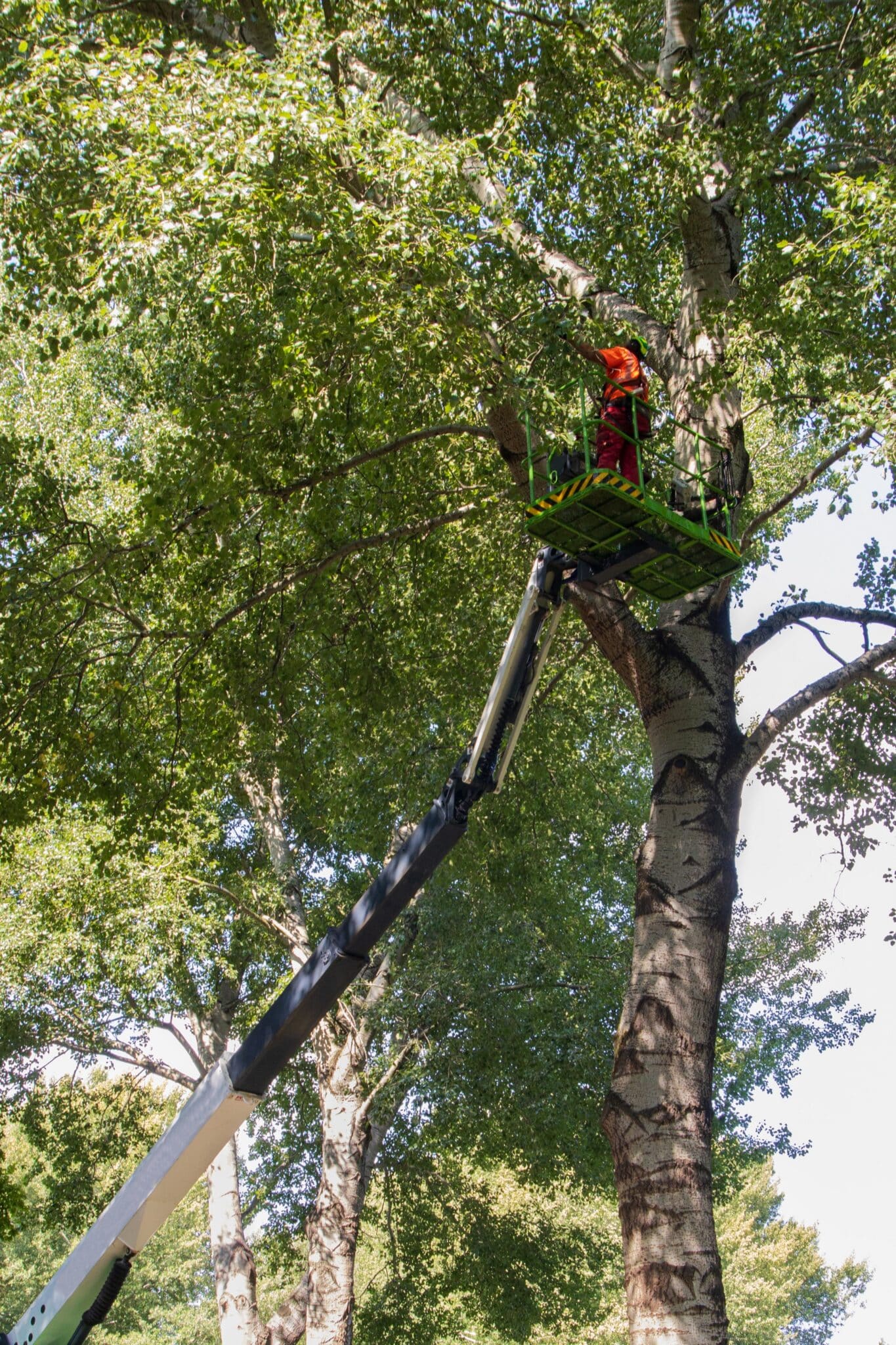
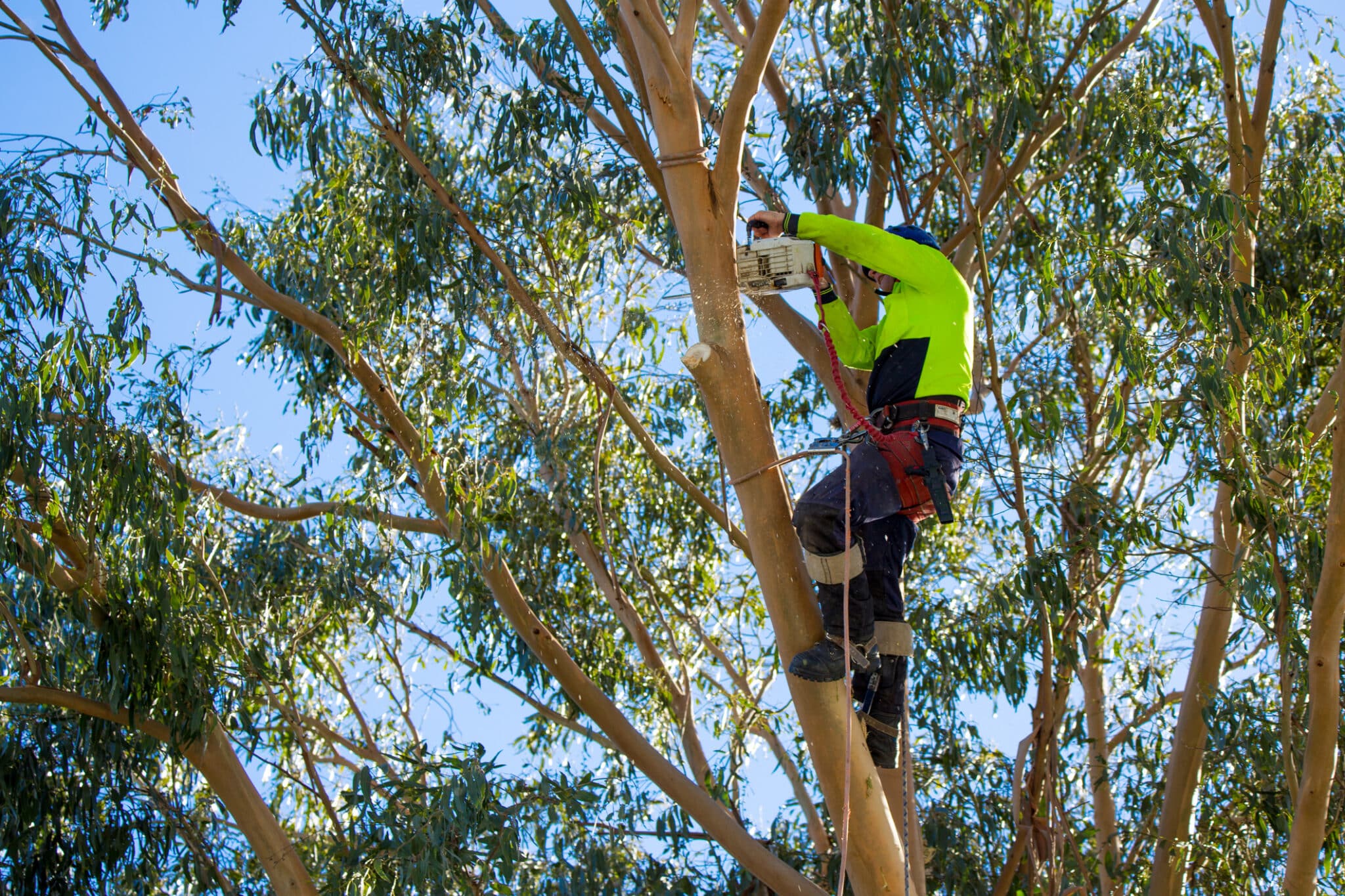
If pruning tasks involve large scaffold limbs, significant decay, or split crotches, hire a professional for safety and structural judgment. Certified arborists bring rigging experience and access to aerial gear that protects both worker and property. Attempting complex cuts without this equipment raises the chance of dropped limbs damaging roofs, fences, or vehicles. In Fort Worth, TX homeowners with mature trees often need this level of care during summer growth spurts.
Call a pro when you see progressive trunk lean, widening bark seams, or repeated failures on the same side of the crown. A qualified crew will perform hands-on diagnostics like sounding with a mallet and measured limb pull tests to confirm weakened attachments. They may also use a written inspection report and photos to document risk and recommend staged work. These records help property managers decide timing and scope without guessing.
Contact a professional if load adjustments require removing more than about a quarter of the live canopy at once or if cuts would expose large wounds. Experts plan staged reduction and thinning that may include targeted canopy thinning to lower wind resistance while preserving tree health. They balance immediate hazard reduction with long-term vigor and will avoid over-thinning that can stress the tree. Proper staging reduces the chance of compensatory water sprout growth that shifts loads later.
When wind-sail effects or rapid reorientation of the crown occur after pruning, ask a pro to evaluate next steps and possible anchoring or cabling measures. Specialists assess root plate stability and may recommend techniques from wind-sail management to limit overturning risk during storms. They also guide monitoring intervals and follow-up pruning to maintain balance as the tree grows. For properties in Mansfield, TX, early professional involvement prevents emergencies and keeps work predictable.

How Pros Assess Risk And Decide Next Steps
Pros begin by scoring immediate failure risk using observable cues like recent bark separation, large cracks, and leaning direction. They document those findings with photos and measurements, creating a baseline for action and follow-up. A certified crew may perform a hands-on limb pull test to see how load shifts under tension near major attachments. This practical check helps decide whether temporary support or removal is safer.
Next, inspectors evaluate the tree’s load path by tracing major scaffold branches back to the trunk and root plate. They measure lever lengths, note attachment angles, and record any decay indicators detected by sounding with a mallet. Inspection outputs often include annotated photos and a written recommendation that outlines urgency and method options. Homeowners can use that report to compare interventions and prioritize safety.
If structural repair looks feasible, professionals outline specific cuts, cabling options, and monitoring intervals to manage risk without unnecessary removal. They consider long-term crown dynamics, choosing staged reduction cuts or cabling only when they reduce lever forces and preserve enough foliage. For complex cases, teams refer to formal tree structure analysis before committing to major edits, helping owners make informed choices. Properties in Fort Worth, TX and Mansfield, TX benefit from documented plans when scheduling work around peak growth.
When decay or root failure makes a tree high risk, crews recommend removal or anchoring combined with hazard mitigation near buildings. Pros will also describe follow-up actions such as periodic inspections, pruning cycles, or soil and root care to prevent recurrence. A clear decision path balances immediate public safety with the tree’s long-term viability. If you see urgent structural signs, contact a professional for an on-site diagnosis and written plan.
Seasonal Timing For Effective Canopy Load Tuning
Timing work around the tree’s growth cycle makes cuts more predictable and less stressful for the plant. Perform major structural reductions before rapid leaf-out so wounds heal while growth is still active. Avoid heavy cutting during peak summer when trees already support maximum foliage and stress. For properties in Fort Worth, TX, early-season tuning prevents high wind-sail loads later in the year.
- Inspect buds for fullness before planning cuts.
- Schedule larger removals in late winter or early spring.
- Stagger reductions across seasons for large trees.
- Document cuts with photos for follow-up checks.
Smaller follow-up thinning often works best after the first flush of growth to fine-tune balance without shocking the tree. These lighter edits let you remove water sprouts and rebalance new weight distribution more safely. A professional can recommend intervals for repeat tuning based on species and vigor. Homeowners in Mansfield, TX should note that fast-sprouting species need closer monitoring after initial cuts.
Professionals time cabling or support installations to coincide with pruning that reduces lever arms and redirects loads inward. They assess wound closure progress during subsequent inspections and adjust supports as needed. An inspection report typically records structural soundness measurements and recommended retuning dates. For more on how pros evaluate long-term stability, consult the team page covering tree structural integrity.
Preventive Care To Maintain Balanced Canopies
Routine inspections and light maintenance keep canopies balanced and prevent major corrections later. Check for shifted growth patterns after each seasonal flush and remove only the smallest competing shoots. Track changes with photos and brief notes to guide future adjustments and avoid over-pruning. For guidance on directing new growth safely, review growth-direction trimming recommendations before making stem-level cuts.
Mulching and targeted watering support root health so the root plate resists lever forces from heavy laterals. Apply mulch correctly, avoiding piled mulch against the trunk, to maintain soil moisture and moderate temperature. Aerate compacted zones around the root flare to improve anchorage without exposing roots unnecessarily. If soil or root damage is suspected, schedule a professional inspection to test root stability and moisture profiles.
Establish a pruning cycle based on species vigor to prevent sudden mass increases that create new load issues. Fast-growing species benefit from twice-yearly light tuning while slower species need less frequent attention. Keep records of pruning dates and cuts to spot patterns of compensatory growth that might require different tactics. Homeowners in Fort Worth, TX often find regular light tuning reduces emergency work during storm season.
Use simple supports and staged subordination when young scaffold limbs show early imbalance to avoid larger future cuts. Install temporary guys or soft ties only as an interim measure while new growth establishes and the tree redirects weight. Monitor tied limbs monthly and loosen ties to prevent girdling as trunks thicken. For properties in Mansfield, TX, early action on young trees saves time and preserves mature structure.
Frequently Asked Questions
What is canopy load tuning and why does it matter?
Canopy load tuning is the selective trimming of branches to balance weight and reduce lever forces on stems and attachment points. It shifts heavy growth toward stronger scaffold branches and opens the crown to reduce wind and storm stress. Proper tuning improves tree resilience during rapid summer growth and lowers limb-failure risk. Because cutting near the trunk can be hazardous, hire a qualified arborist for inspections and work when safety risks exist.
How do I spot uneven weight in my tree crown?
Look for branches that lean heavily to one side, sparse foliage on part of the crown, or limbs longer than their neighbors. Measure imbalance visually from the ground and note repeated limb crossings or a heavy lateral scaffold. Use canopy load tuning principles when deciding which limbs create long lever arms that increase failure risk. If limbs show splitting, decay, or you feel unsafe, stop and call a professional arborist for inspection and corrective pruning.
When should I call a pro for canopy load tuning?
Call a pro when limbs lean heavily to one side, causing visible canopy imbalance or rubbing branches. If large branches show major cracks, split bark, or recent failure, contact an arborist immediately. When trees are near structures, power lines, or high-traffic areas, hire a professional to reduce risk. Caution: canopy work can be dangerous, so a certified tree service should perform canopy load tuning for safety and proper cuts.
Which pruning cuts reduce lever forces most effectively?
Removing long, heavy lateral limbs near the canopy edge reduces lever forces by shortening load arms and lowering wind catch. Cutting back competing codominant stems at the bark ridge shifts weight to a single, stronger leader and reduces splitting risk. Thinning interior branches to open the crown lowers sail area and decreases leverage on major limbs, caution: cuts at height or near large wounds carry safety risk. For complex canopies or large removals, hire a professional arborist to inspect and execute canopy load tuning safely.
How often should canopy load tuning be scheduled?
Most established shade trees benefit from canopy load tuning every 2–4 years to manage weight and reduce lever forces during growth. Young, fast-growing trees may need tuning annually until their structure stabilizes. Inspect after major storms, heavy growth seasons, or if you see leaning, cracking, or repeated branch failure. If cuts require climbing or heavy equipment, exercise caution and hire a professional arborist for safety and proper diagnosis.