


Wind Smart Trimming that Reduces Sway and Breakage in Storms
Key Takeaways About Wind Smart Trimming
Wind smart trimming means selective cuts that lower wind load and stabilize a tree’s structure. This guidance is for homeowners and property managers before and after storms when tree failures threaten safety and property.
- Identify leaning trunks cracking roots and repeating limb failures quickly.
- Prevent large sail surfaces by thinning dense outer canopy areas.
- Avoid flush cuts and stubbed branches that invite decay near unions.
- Spot decay cavities bark inclusions and weak attachments during inspections.
- Reduce leverage by shortening long laterals and balancing canopy mass.
- Plan staged reductions and follow up with professional stability inspections.
Introduction
Strong winds expose weak cut patterns and overloaded canopies that increase sway and branch failure risk during storms. Homeowners see split trunks, cracked limbs, and uprooted trees after severe weather. Wind smart trimming focuses on cuts that lower wind load and improve trunk and root stability. The right cuts reduce the chance of property damage and costly emergency removals.
Many problems start with unbalanced crowns that catch wind like a sail and transfer force to the trunk. Improper thinning or topping can make trees more brittle and prone to sudden breakage. Professional pruning aims to shift wind forces away from vulnerable unions and large lateral limbs. That approach helps trees resist gusts rather than amplify them.
Visible signs such as heavy leaning, repeated limb failure, or large dead branches point to increased wind risk. An inspector will check branch attachments, decay, and previous cut quality to confirm the problem. Diagnosing wind vulnerability also involves observing canopy density and asymmetry from the ground. Clear diagnosis separates cosmetic pruning from structural work that actually reduces failure risk.
In many neighborhoods near Fort Worth, TX and properties in Prosper, TX, storms reveal weak trees quickly. Addressing these risks early protects roofs, power lines, and landscape investments. When cuts focus on reducing wind load and stabilizing key limbs, trees perform better in storms. If you notice major decay or severe lean, contact a qualified arborist for an inspection and recommendations.
How Wind Smart Trimming Reduces Sway And Load
Wind smart trimming means making specific cuts that reduce wind load and stabilize the tree’s key structure. Proper cuts remove high-wind surfaces while keeping enough live foliage for tree health. A homeowner often asks, “Will pruning prevent my tree from crashing in a storm?” The short answer is yes when cuts lower sail area and improve branch distribution. Professionals check branch attachments and decay to confirm whether pruning will help.
- Remove crossing or rubbing branches.
- Thin dense portions of the crown.
- Reduce long, heavy lateral limbs.
- Create a clear central leader when appropriate.
Thinning reduces the sail effect by opening the canopy so wind passes through instead of pushing the tree. Selective shortening reduces leverage from long limbs without removing large weight-bearing branches. Those changes lower peak forces on the trunk and roots during gusts. In Fort Worth, TX homeowners see fewer split limbs after targeted thinning and shortening.
Cut placement matters: make pruning cuts just outside the branch collar to allow proper wound closure. Removing entire codominant stems or reducing uneven mass shifts load back toward the trunk. Inspectors often use a visual check and gentle shaking to see how the canopy responds. For guidance on managing large sail areas, consult the resource on wind sail management.
When weight or decay concentrates on one side, reduction cuts redistribute forces and lower tipping risk. A professional will note visible decay, bark defects, or weak unions during diagnosis. In a common situation, a tree with repeated limb failure shows poor attachment and dense outer growth, prompting structural pruning.
Common Tree Structures That Increase Wind Risk
Open grown crowns with long, unopposed laterals increase wind risk because limbs act as long levers during gusts. These extended limbs place high bending stress at the attachment point and raise the chance of sudden failure. Trees with heavy end weight often show cracks or splitting at the base of the limb. Professionals look for tear-out scars and bark ridges to gauge attachment strength.
Multiple leaders or co-dominant stems create a weak central structure that concentrates force where stems meet. That arrangement often leads to bark-included unions that fail under load during storms. Corrective pruning focuses on establishing a single strong leader or balancing stem sizes to reduce leverage. Inspectors use visual checks and gentle canopy movement to see which union bears the most load.
Dense outer foliage and low-hanging skirts increase sail area near edges where limbs are thinner and less supported. Thinning in these zones reduces wind force on the perimeter without removing main support branches. When outer growth hides decay or cavities, removal of those sections helps reduce unexpected breakage. For targeted canopy adjustments, see the guidance on canopy load tuning to understand how selective thinning changes wind response.
Long vertical trunks with sparse lower branching concentrate wind moment near the top and can cause whole-tree leverage failures on shallow roots. Trees that have lost lower limbs through past pruning or storm damage often show this vulnerable profile. Hazard limb trimming around the mid- and upper canopy lowers top-heavy loads and reduces overturning risk. Homeowners should watch for these structures and call a professional when they appear.
Why Branch Distribution Changes Cause Failures
When branch distribution shifts suddenly, load paths through the trunk change and weak points can develop where none existed before. A heavy cluster on one side raises bending moments that stress attachments and encourage cracks to form. Inspectors look for new bark ridges, visible compression wood, and fresh wounds that indicate shifted load. In Fort Worth, TX homeowners may notice new leaning or repeated small failures after a storm or pruning event.
Removing or shortening certain limbs without compensating cuts elsewhere concentrates force onto remaining branches and unions. That concentration accelerates decay at attachment points and can lead to progressive failure over multiple wind events. A professional will check union geometry, pull tests on suspect limbs, and use recorded photos to track change over time. For trees with uneven mass, techniques explained in the balanced cut guidance help redistribute weight before failures start.
Decay and hidden cavities change how branches carry load, so altered branch layout can expose weakened internal areas to higher stress. During inspection, an arborist will probe suspect wood with a sounding mallet and examine cut surfaces for soft or crumbly tissue. They may also note resin flow, fungal fruiting bodies, or hollow sounds when tapping to support their assessment. In a common situation, a tree that lost a large lateral last season later shows collapse at a nearby union under similar wind conditions.
Root plate shifts from localized heavy crowns can reduce anchorage and magnify tilt when branch distribution changes. Checking soil heave, root flare exposure, and trunk base cracks helps confirm reduced stability. Corrective pruning plans aim to balance canopy mass and lower sail area while keeping enough foliage for root support. Homeowners in Prosper, TX should have a visible inspection and written recommendations when branch distribution has changed markedly.
Pruning Cuts That Lower Wind Load Without Stress
Start cuts on smaller secondary branches to reduce sail area without removing major support limbs or causing large wounds. Make heading cuts that shorten a branch while leaving the collar intact so the tree can seal the wound. Avoid heavy flush cuts that remove the branch collar and slow closure, which increases decay risk near the trunk. When possible, use multiple small reduction cuts rather than one deep cut to limit stress on the remaining limb.
- Thin outer branches to open airflow.
- Shorten long laterals by one-third maximum.
- Remove deadwood back to live tissue.
- Cut back sucker growth at the base.
Favor reduction cuts that move the end of a limb back toward a lateral at least one-third its diameter to keep strength. Make cuts just beyond a healthy lateral bud or branch collar to promote strong regrowth and avoid weak stubs. Inspect the remaining attachment for signs of decay after each cut and stop if you see soft or crumbly wood. A professional will use a handsaw and pruning shears for these cuts, reserving chainsaws for larger removals.
When editing co-dominant stems, remove the smaller stem or use selective shortening to reduce leverage and avoid a large wound at the union. Balance mass by removing opposing branches across the canopy rather than concentrating cuts on one side. For structural edits that change load paths, review a written plan and follow the techniques described for controlled canopy changes. A useful resource for larger structural edits is the guidance on structural canopy edits.
Homeowners often confuse topping with reduction, proper reduction preserves branch architecture while lowering wind load and maintaining health. In a common situation, a tree repeatedly loses long outer growth, and a pro will shorten those limbs instead of removing them entirely. They will document the cuts with photos and notes to track closure and any new decay over time.
When Homeowners Should Call A Professional
Call a professional when you notice structural cracks, deep trunk splits, or roots lifting the soil near the base. These signs often indicate compromised strength that typical homeowner pruning can worsen. A pro will assess whether reduction cuts or bracing better protect the tree while reducing wind load. Immediate action can prevent property damage and reduce later emergency removals.
If multiple large limbs have visible decay or fungal fruiting bodies, schedule an inspection rather than attempting removals yourself. The arborist will use a sounding mallet and visual checks to locate internal decay and map weak areas. They may recommend staged removals to lower canopy load without sudden loss of mass. This approach reduces the chance of creating an unbalanced canopy after cutting.
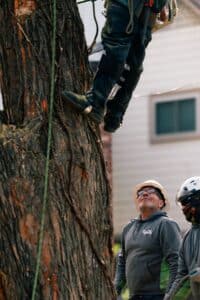
Hire a qualified crew when work requires climbing above the lower canopy or using a chainsaw near roofs or lines. Professionals use rope systems and rigging to control large limb drops and avoid additional trunk damage. They will also plan cuts that guide regrowth and improve wind response using growth-direction techniques. For improving airflow through dense crowns, ask about adjustments tied to canopy airflow boost strategies.
Call for help if previous pruning left large flush cuts, stubbed branches, or uneven mass that now creates new sway or leaning. A pro will perform a hands-on inspection, document problem areas with photos, and test limb stability under gentle force. They will design corrective cuts that follow growth direction best practices and limit wound size.
How To Inspect Trees For Immediate Red Flags
Start with a walk-around looking for obvious red flags such as fresh cracks, sagging limbs, or soil heave at the trunk base. Note any sudden lean changes or newly exposed roots and photograph each concern for later comparison. Observe dead branches that remain attached high in the crown, these increase failure risk during gusts and need follow-up. If you see fungal growth on the trunk, flag it for a professional decay assessment.
Perform simple tactile checks by tapping suspect limbs and listening for hollow or dull tones that suggest internal decay. Gently apply hand pressure to large lower limbs to check for excessive movement at the union or separation. Inspect branch collars and bark ridges for compression or bark inclusion where unions may fail under wind load. When you find suspect attachments, document their location and size for the arborist.
Look upward with binoculars for recent wound patterns, large pruning scars, or stubbed cuts that could hide decay and change load paths. Pay attention to uneven foliage distribution that creates an off-center sail and increases tipping risk during storms. Check for repeated failures at the same union, that pattern often signals a long-term weakness needing structural work. For balancing visible mass without large removals, review techniques like branch weight balancing and note where it might apply.
Note soil moisture and drainage near the root zone because saturated ground reduces anchorage during high winds and can precede root failure. Observe trunk base cracks, root flare exposure, and any heaving that indicates a lifted root plate needing urgent attention. If you detect severe decay, significant lean, or roots pulling away, contact a professional immediately for hands-on testing. Professionals will follow up with sounding, pull tests, and a written assessment to confirm risks and recommend cuts.
Seasonal Timing And Maintenance To Prevent Breakage
Schedule major structural pruning in late winter while the tree is dormant to limit excess spring growth and pest attraction. Dormant cuts reduce bleeding for some species and let inspectors see branch architecture clearly. Avoid heavy cuts during active growth when wounds can reopen and sprout weak water shoots. If fungal fruiting appears after dormancy, plan staged reductions rather than one large removal to maintain balance.
- Plan light thinning every 3–5 years for mature trees.
- Target secondary limbs rather than primary structure when reducing sail.
- Remove deadwood promptly after winter inspections.
- Schedule follow-up checks after big reductions to monitor closure.
For trees in Fort Worth, TX, follow-up maintenance after a winter cut helps spot new decay or shifted lean early. A routine midseason check can catch epicormic shoots and dense regrowth that increase wind load later in the year. Professionals will record photos and measure new growth to decide if further reductions are needed before storm season. Homeowners should note rapid regrowth that crowds leaders or creates heavy outer clusters.
When limb clearance near structures or lines is needed, plan reductions during lower wind months for safety and better control. Discuss specific clearance goals with the crew and reference procedures like limb reduction, clearance, and risk control to align expectations. After any major cut, schedule a stability inspection to confirm the tree’s response and root-zone condition. For properties in Prosper, TX, coordinate timing to avoid periods of heavy rainfall that weaken anchorage.
Poststorm Care And Recovery Steps For Trees
Begin by clearing small broken branches and hanging debris so inspectors can access wounds and assess cambium damage. Take photographs of splits and torn bark from multiple angles to document progression before any repair work. A pro will look for exposed roots and check for bleeding or sap flow that indicates bark loss near the base. If you see mushrooms or fungal bodies after the storm, mark their locations for further decay evaluation.
Next, limit heavy pruning immediately after the storm to avoid further stress and allow short-term recovery of the root system. Make temporary support decisions like cabling only after a hands-on inspection and not as a homeowner DIY project. During the follow-up visit, a professional will probe suspect wood, test limb attachments under controlled force, and record findings in a written plan. Those diagnostics guide whether staged crown reduction or gradual moves are safer than instant large removals.
When major reduction is needed to rebalance canopy mass, choose measured cuts that shift load gradually rather than removing large sections at once. Professionals often recommend incremental crown reduction and may reference local crown reduction guidance such as crown reduction practices to plan staged work. After each stage, inspect for new cracks, regrowth direction, and root-zone condition before proceeding with more cuts. If soil heave or root exposure appears, pause and consult about root repair and anchorage options.
Monitor the tree for several months for delayed decline indicated by thinning foliage, dieback, or epicormic shoots that signal stress responses. In a common situation, a tree will drop small branches later in recovery, prompting a recheck of weak unions and any previously hidden decay. Homeowners in Fort Worth, TX and those in Prosper, TX should schedule a seasonal follow-up to compare photos and written notes recorded after the storm. If continued decline or safety concerns show up, contact a certified arborist for prioritized intervention and a documented plan.
Frequently Asked Questions
What is wind smart trimming and how does it help trees?
Wind smart trimming means selective cuts that reduce sail area, remove weak limbs, and balance canopy weight for lower wind load. It targets crossing branches, heavy leaders, and dense clusters to reduce sway and failure points. A professional inspects trunk structure, branch unions, and canopy movement before cutting to confirm needed reductions. These jobs carry safety risks, hire a qualified arborist for complex or tall-tree work.
Which cuts reduce sail area without harming tree health?
Crown thinning removes selective branches to let wind pass through while keeping a balanced canopy and healthy foliage.
Crown reduction shortens long, heavy limbs back to strong lateral branches, lowering sail area without creating large wounds.
Selective branch removal targets crossed, rubbing, or codominant stems to reduce failure points while preserving structural wood.
These cuts carry risk, for safety and correct wound placement, hire a certified arborist or professional tree crew.
How do pros diagnose wind-vulnerable branches?
A pro begins with a visual walkaround, noting lean, asymmetric crowns, overlapping limbs, and missing secondary branches that increase wind load.
They probe suspect unions and bark-included crotches, checking movement, decay pockets, and wood firmness with a mallet or tapping.
Technicians use binoculars, measured trunk taper, and sometimes a simple pull test or photos to document sway and likely failure points.
If climbing or cutting looks risky, they caution the homeowner and recommend hiring an insured arborist for Wind smart trimming and repairs.
When should homeowners call a pro after storm damage?
Call a pro if large limbs hang over roofs, power lines, or the trunk shows fresh split wounds that change tree structure. If you notice root heave, tilted trunk, or soil cracking, contact an arborist promptly to assess stability. Avoid working near downed lines or heavy limbs yourself, these situations carry serious risk and require trained crews. A professional will perform Wind smart trimming assessments and recommend removals, cabling, or targeted cuts to reduce future breakage.
What maintenance schedule supports wind smart trimming?
Inspect wind-exposed trees every 12 months and after major storms to watch for new cracks, splits, or leaning trunks. Schedule targeted Wind smart trimming every 2–4 years to reduce sail area and remove weak lateral branches. Keep young trees on a 1–2 year pruning cycle to develop strong central leaders and well-spaced scaffold branches. If you see torn limbs, fungal fruiting bodies, or root heave, stop work and call a professional because climbing and cuts carry safety risk.