
Stubbing Cut Removal to Correct Old Flush Cuts
Key Takeaways About Stubbing Cut Removal
Stubbing cut removal is correcting old flush cuts and stubs so the tree can form a proper healing response. This summary is for homeowners and property managers who notice old wounds or decay and need guidance on when to act.
- Identify damaged collars by checking bark ridges and callus patterns.
- Prevent decay spread by exposing live wood at the collar edge.
- Avoid cutting into the trunk when making corrective collar-aware cuts.
- Spot signs of decay such as fungal bodies and soft discolored wood.
- Reduce hazard with staged reductions and controlled lowering for large limbs.
- Plan follow up monitoring and document wound closure with photos.
Introduction
Many trees on residential properties show old flush cuts or stubbed branches that never healed properly. These poor cuts remove the branch collar or leave stubs that trap moisture and invite decay. Homeowners often notice crumbling bark, dark staining, or weak regrowth around the cut. Addressing these issues matters because decay can spread into the main trunk and weaken structural integrity.
Stubbing cut removal focuses on correcting those past mistakes by making collar-aware cuts that encourage natural healing. A proper cut slows decay and helps the tree form a protective callus over the wound. If left untreated, hidden rot can lead to branch failure during storms or heavy winds. Visible signs like sunken wood or sap flow can indicate deeper problems needing attention.
Symptoms can show up years after the original cutting, so inspection matters even on older trees. A trained arborist looks for bark patterns, reaction wood, and the condition of the branch collar to plan the next steps. For homeowners in Aledo, catching these issues early reduces the chance of losing a mature limb. Small corrections now protect long term health and structural balance in the canopy.
Correcting old cuts often restores better branch structure and reduces decay progression without removing the whole limb unnecessarily. Professionals use measured cuts and an inspection of surrounding tissue to confirm the problem and choose the right approach. For properties in Mansfield, prioritizing collar-aware work prevents future hazards near buildings and walkways. If you see ongoing decay or large stubs, consider contacting a certified arborist for a detailed inspection.
What Stubbing Cut Removal Means And Why It Happens
Stubbing cut removal means removing improperly short or flush-cut branch remnants so the tree can form a proper healing response. Homeowners often ask whether removing a stub will make the tree worse, the short answer is that correcting a bad cut can reduce decay and improve closure. A professional explains removal aims to expose live tissue at the collar without cutting into the trunk. This process helps the tree form a callus and limits the entry points for wood-rotting organisms.
- Identify the remaining stub length.
- Map the branch collar and bark ridges.
- Decide if the limb can be retained or reduced.
- Plan cuts to follow natural branch architecture.
Stubs often result from pruning that ignored the branch collar or from topping attempts that left short leaders. Visible symptoms include sunken bark, dark staining, and a lack of tight callus formation around the wound. A homeowner may notice sap flow or fungal fruiting bodies near old cuts, which often signals internal decay. These signs help decide if controlled removal will improve health or if a larger corrective cut is needed.
A professional will diagnose the problem by inspecting bark patterns, probing exposed wood, and checking for reaction wood. They may use a small knife to examine the cambium and a mallet to detect hollow sounds in the trunk or limb. A simple diagnostic is looking for a clear collar line and healthy beige wood at the cut, dark, soft wood suggests decay. For guidance on correct cutting shapes and collar-respecting technique, review the practical examples on branch cutting techniques.
For homeowners in Aledo and Mansfield, early recognition avoids larger removals later and reduces risk near structures. If you see ongoing decay or weak regrowth, a trained arborist can confirm whether stubbing cut removal will help. When safety risks exist, such as large unstable limbs, contact a professional rather than attempting the work yourself. Properly done, this corrective step restores canopy balance and reduces future structural problems.
Identifying Old Flush Cuts Versus Proper Collar Cuts
Start by comparing the old wound edge to the surrounding branch collar tissues to spot a true flush cut. Look for a smooth scar where the collar was removed versus a raised collar that wraps the branch base. If the bark ridge and collar are missing, the cut likely removed protective tissues and impaired normal closure. Photographs from different angles help document whether the collar remains intact.
Another clear sign is callus growth patterns around the cut, proper collar cuts show a tight, even callus forming from the collar outward. Poor flush cuts have uneven, thin callus or none at all, often with sunken wood at the center. Probe the exposed wood gently with a knife to check for firm beige wood versus soft, dark areas that suggest decay. This simple check helps a professional decide whether corrective cutting can preserve the limb.
Examine any new shoots or epicormic growth near the old cut to assess structural recovery and vigor. Abnormal sprouting directly from the trunk or the cut surface often indicates stress and an interrupted collar response. For a precise look at where to place corrective cuts, consult resources on proper collar work like the guide to branch collar cuts. That resource clarifies how much tissue to preserve when re-cutting toward the collar.
When assessing risk for nearby structures, note the direction and weight of remaining limbs as well as decay extent revealed by probing. Homeowners in Aledo should watch for progressive softening or new fungal fruiting bodies near old cuts. For properties in Mansfield, visible cracks or a hollow sound when tapping larger limbs can indicate deeper problems. If those signs appear, a professional inspection is the next logical step to confirm findings and recommend corrective pruning or removal.
How Improper Cuts Lead To Decay And Structural Risk
Improper cuts create entry points where moisture and decay organisms collect against the remaining wood, accelerating rot toward the branch union. Over time, wood-staining and soft pockets develop under the bark and weaken attachment points between limb and trunk. A professional inspects by probing suspect areas with a knife and tapping to compare sound differences along the branch. This helps determine how far decay extends before any corrective work begins.
When the branch collar is damaged, the tree cannot form a continuous protective callus that seals wood from pathogens and insects. That loss allows fungi and beetles easier access, and decay can track inward along the grain toward structural cores. Technicians also use a small increment borer or sounding with a mallet to locate hollows without excessive cutting. Those diagnostic steps guide whether partial reduction or full removal best reduces hazard.
Stress from an improper cut changes how weight loads distribute in the canopy and can cause secondary cracks or reaction growth forming weak attachments. Visible signs include slanting bark cracks, new epicormic shoots near the wound, and unexpected limb bending during wind. A climber or qualified inspector checks levered limbs and assesses load paths before making any collar-aware corrections. For larger limbs, crews combine corrective cuts with the three-cut method for safe limb removal to control drop and limit additional tearing.
Corrective work targets healthy wood at the collar and preserves as much protective tissue as possible to encourage callus closure and restore structural function. After diagnosing decay limits and attachment integrity, professionals plan staged reductions to balance the canopy and reduce sudden load shifts. Homeowners in Aledo and Mansfield should document visible symptoms and request a written inspection report when considering work near structures. If signs show extensive internal decay or instability, hire a trained arborist rather than attempting DIY corrections.
When To Act On Visible Stubs And Healing Problems
Visible stubs that fail to form a continuous callus often need action when they show progressive softening, fungal fruiting bodies, or bark separation that expands over months. A quick homeowner check is to press the wound edge gently and look for spongy wood or dark staining that extends past the original cut. If the limb above the stub leans or shows new cracking, the risk of failure increases and timing matters. For properties in Mansfield near structures, timely corrective work can prevent hazardous limb drop that could damage roofs or walkways.
- Inspect for soft or discolored wood at the wound.
- Look for fungal growth near the stub base.
- Note new cracks or splitting around the collar.
- Watch for excessive epicormic sprouting from the wound.
A professional diagnosis starts with a close visual exam and simple hands-on checks to confirm decay extent and wound stability. An arborist will probe with a knife, tap sections to compare sound, and photograph findings before recommending corrective cuts. They may also suggest staged reductions to rebalance the canopy if the corrected cut would shift loads. Homeowners in Aledo should ask for documented inspection notes and photos to understand recommended timing and scope.
Act sooner rather than later when wounds show expanding decay or when limbs are overhanging people, vehicles, or utilities, because delaying can enlarge the work needed. If the symptom checklist or diagnostic checks suggest deep decay, plan for professional removal or staged correction instead of a simple trimming visit. For guidance on maintaining mature trees after corrective work, refer to the resource on pruning mature trees. When safety risks are present, contact a qualified arborist rather than attempting the work yourself.
Step By Step Stubbing Cut Removal Technique
Begin by establishing safe access and clear sightlines around the target limb, keeping bystanders out of drop zones. Inspect the stub and collar from multiple angles to locate live tissue and any hidden decay before cutting. A professional would mark the intended collar-aware cut with chalk or tape to guide accurate removal. For homeowners in Aledo this pre-cut review helps avoid surprises when a stub hides deeper wood rot.
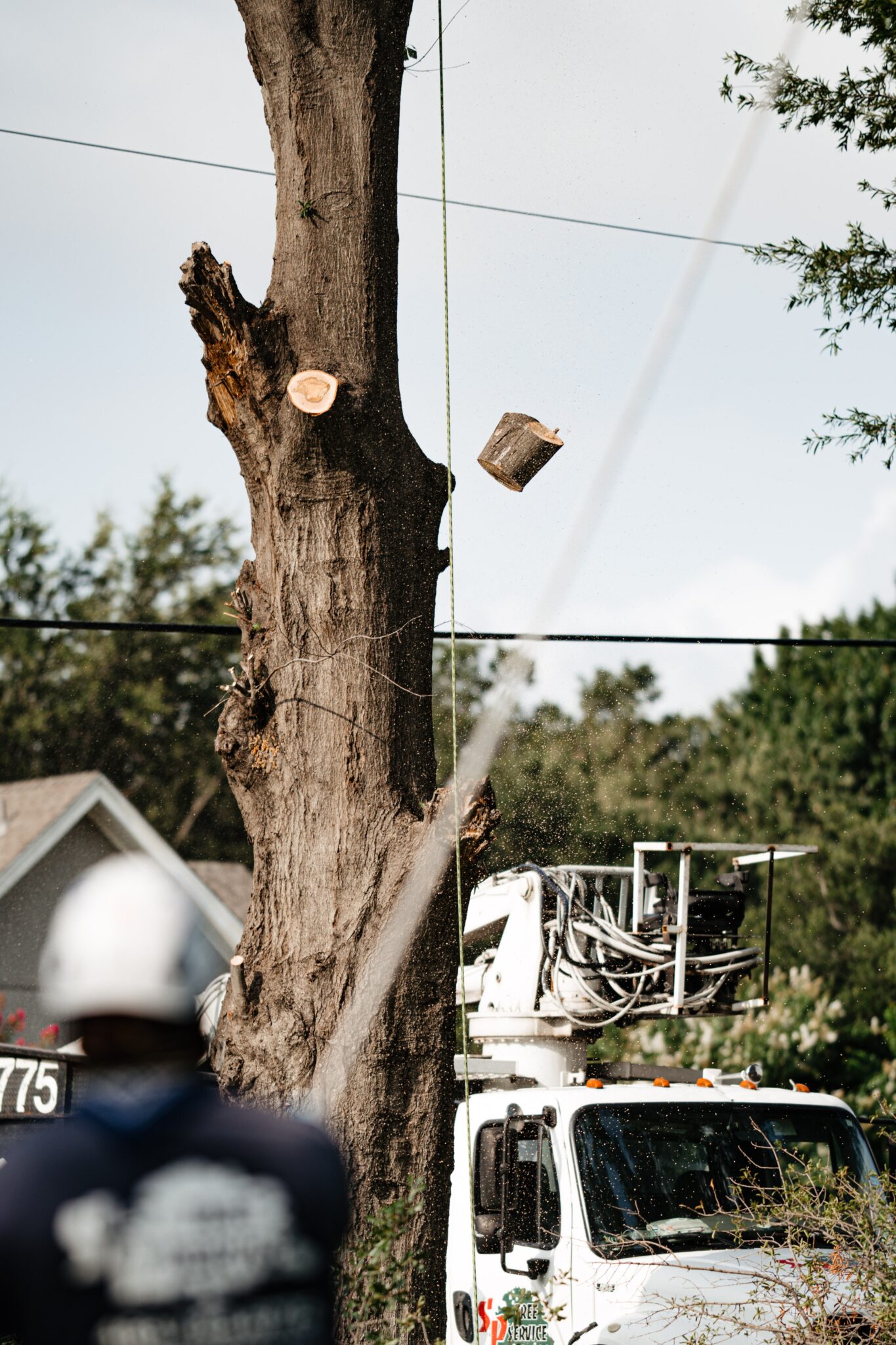
Make an undercut a short distance from the collar to stop bark tearing as the limb falls, then follow with a top cut outside the undercut. Remove the weight section using controlled lowering or rope if the limb is large to prevent ripping the bark. After the main weight is off, carefully cut back toward but not into the collar so the natural tissue remains intact. This staged approach reduces collateral damage and preserves the healing edge around the branch union.
If decay appears while opening the stub, widen the cut just enough to reach solid, pale wood without cutting into the trunk. Probe the remaining wood with a knife to confirm firmness and remove any loose, necrotic material to create a clean margin. Record photos and measurements to document the cut and residual condition for future monitoring or follow-up treatment. Homeowners in Mansfield may find these records helpful if later inspection or rework is needed near structures.
Finish by smoothing ragged bark with sharp pruning tools and leaving the wound edges tidy so callus tissue can form uniformly. Avoid sealing the wound with paints or dressings, natural closure proceeds more effectively with exposed clean tissue. Note the direction of regrowth and plan any follow-up pruning to rebalance the canopy over the next season. If the limb is large, or if safety concerns arise during any step, contact a professional instead of continuing alone.
Tools Safety And When A Homeowner Should Call
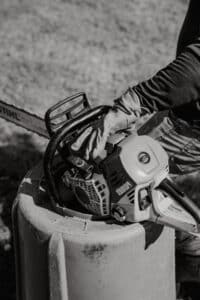
Power tools and hand tools both work for stubbing cut removal, but using them safely prevents further injury to the tree and operator. Inspect chainsaw teeth, pruning-saw blades, and loppers before use and replace dull or damaged parts to reduce tearing of bark. Always wear eye protection, gloves, a hard hat, and chainsaw chaps when using powered saws near shoulder height or higher. If you feel unsure about tool condition or setup, stop and get a professional assessment to avoid creating new wounds.
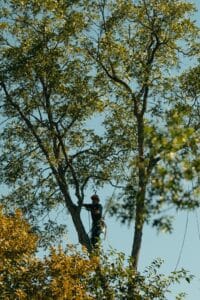
When working aloft, use a certified climbing harness or secure ladders with a spotter to control falls and poor angles during cuts. Avoid cutting while standing on the limb you intend to remove, and never cut above your head without a stable platform and training. Secure loose branches with a rope before final cuts to prevent unexpected swing and bark damage on the trunk. Homeowners in Aledo should consider hiring a trained crew for any work that requires climbing or complex rigging.
Simple diagnostic checks can reveal when a job should stop and a pro should take over, such as seeing deep internal decay, multiple fused stems, or heavy weight shifts after an initial cut. A qualified arborist will use methods like sounding with a mallet, probing with a knife, and visual crown assessment to confirm structural safety before continuing. For complex decisions about canopy balance and limb load redistribution, consult a specialist and reference a detailed analysis like tree structure analysis. This avoids making cuts that unintentionally increase failure risk near structures or utilities.
Call a professional when the stub involves large limbs, visible internal decay, or work near roofs and power lines to reduce danger and liability. For properties in Mansfield, professional crews can also stage reductions to manage load shifts and protect nearby buildings. Ask for documented inspection findings, recommended corrective actions, and a safety plan before work begins to ensure clear expectations. When safety risks are medium or higher, hiring an arborist protects the tree and everyone on the ground.
Aftercare Pruning To Promote Healing And Regrowth
After corrective cuts, leave young tissues undisturbed so callus can form and cover the wound naturally over months. Monitor the wound for steady callus growth and any new dark staining or soft spots that could indicate lingering decay. If new fungal bodies appear or wood softens, schedule a follow-up inspection to reassess structural risk and treatment options. Homeowners in Aledo should photograph wounds periodically to track closure and note any sudden changes after storms.
- Check wounds monthly during the first growing season.
- Remove only dead shoots near the collar.
- Keep soil moisture steady without overwatering.
- Mulch lightly beyond the root flare.
- Avoid fertilizing until the tree shows steady new growth.
Prune competing or crowded shoots that sap energy away from the healing collar, doing so in late dormant season when possible. Use sharp tools and make small corrective cuts rather than heavy reductions that shift loads unexpectedly. If branch removal would alter canopy balance, consult a structural assessment to plan staged adjustments and support regrowth. For complex cases, reference a professional tree stability evaluation such as a tree structural integrity review before major follow-up pruning.
Watch regrowth patterns and remove poorly attached epicormic sprouts early to favor strong scaffold branches forming from proper crotches. A professional will measure callus coverage, probe suspect wood, and document any ongoing decline before endorsing more work. For properties in Mansfield near structures, coordinate timing so major pruning falls in low-use periods to reduce risk from falling debris. If you detect changing sounds when tapping the limb after healing begins, get an expert reassessment promptly.
Preventing Future Damage With Collar Aware Pruning
Start by scheduling regular, collar-focused pruning cycles to reduce the chance of repeat stubbing or flush cuts on younger scaffold branches. Inspect branch collars for competing shoots during each visit and remove only those that interfere with collar formation. A trained pruner selects cuts that keep natural branch angles and avoid leaving short leaders that encourage future stubs. This steady attention reduces repair needs and preserves long-term limb attachments.
Teach household members and landscape crews where the branch collar starts and stops to prevent accidental flush cuts during informal trimming. Photographs of correct collar cuts help nonprofessionals identify safe pruning lines and avoid cutting too close to the trunk. If workers must use saws near the crown, require chalk marking of the collar before any final cut. Clear, simple instructions often prevent the small mistakes that lead to larger decay problems later.
Combine collar-aware pruning with targeted deadwood removal and risk assessment when you see declining tissues near unions to limit decay spread. Remove only the dead portions while leaving collar tissue intact, and document findings with photos and brief notes for later monitoring. For guidance on recognizing hazardous dead branches and managing them safely, consult the resource about deadwood removal risk and appearance. This paired approach keeps the canopy safer and supports orderly wound closure.
Plan pruning work seasonally to favor active growth periods when callus formation is strongest, and avoid heavy pruning during stress events like drought. Monitor wound closure after each job and schedule touch-ups only if callus fails to progress or new decay appears. Homeowners in Aledo should consider annual checks, and properties in Mansfield may need staged pruning to manage canopy loads near buildings. When in doubt about structural concerns, call a professional for diagnosis and a written plan.
Frequently Asked Questions
What is stubbing cut removal and when is it needed?
Stubbing cut removal means cutting back a remaining stub to the branch collar so the tree can compartmentalize decay and form a proper callus. It is needed when old flush cuts or stubs show discoloration, fungal fruiting bodies, or dying bark around the wound. A professional inspects the collar, measures decay depth, and confirms whether a collar-aware cut or larger corrective pruning is required. If the limb is large or near structures, exercise caution and hire a qualified arborist to avoid injury or property damage.
How can I spot an old flush cut on a mature limb?
Look for a flattened or sunken wound where the branch collar is missing and bark grows over the cut surface. Old flush cuts often show darkened wood, cracking, or a line of decay radiating from the wound. You may notice reduced new branch growth and bark irregularities above the cut that suggest disrupted healing. If the limb is large or signs of decay exist, use caution and consult a professional for safe stubbing cut removal evaluation.
Will removing a stub increase decay or help healing?
Proper stubbing cut removal usually reduces long-term decay by restoring the branch collar and promoting natural wound closure. If you cut back to the collar instead of leaving a stub, the tree forms callus tissue more effectively. Removing a large or unstable stub can pose safety risks, so use caution and consider hiring a professional arborist. A pro will assess decay with visual inspection and simple tools before deciding to remove the stub.
What inspection steps do pros use to confirm decay?
A pro starts with a visual survey, looking for sunken bark, fungal fruiting bodies, and brittle wood around old flush cuts. They probe suspect areas gently with a blunt awl or screwdriver to test for soft, decayed wood and hollow sounds. If results are unclear, they use a moisture meter and sounding with a mallet to map internal decay patterns. Because climbing and cutting near decay is risky, they recommend a qualified arborist for any Stubbing cut removal or follow-up work.
How soon should I schedule corrective collar-aware cuts?
Schedule corrective collar-aware cuts as soon as you notice old flush cuts or persistent stubs to limit decay and pest entry. Early action during the tree’s growing season helps wound closure but avoid peak heat or drought stress. If branches are large, near structures, or pose safety risks, call a professional arborist promptly for assessment and Stubbing cut removal. Work with a pro if you see active rot, insect galleries, or fungal fruiting bodies to reduce risk and liability.