

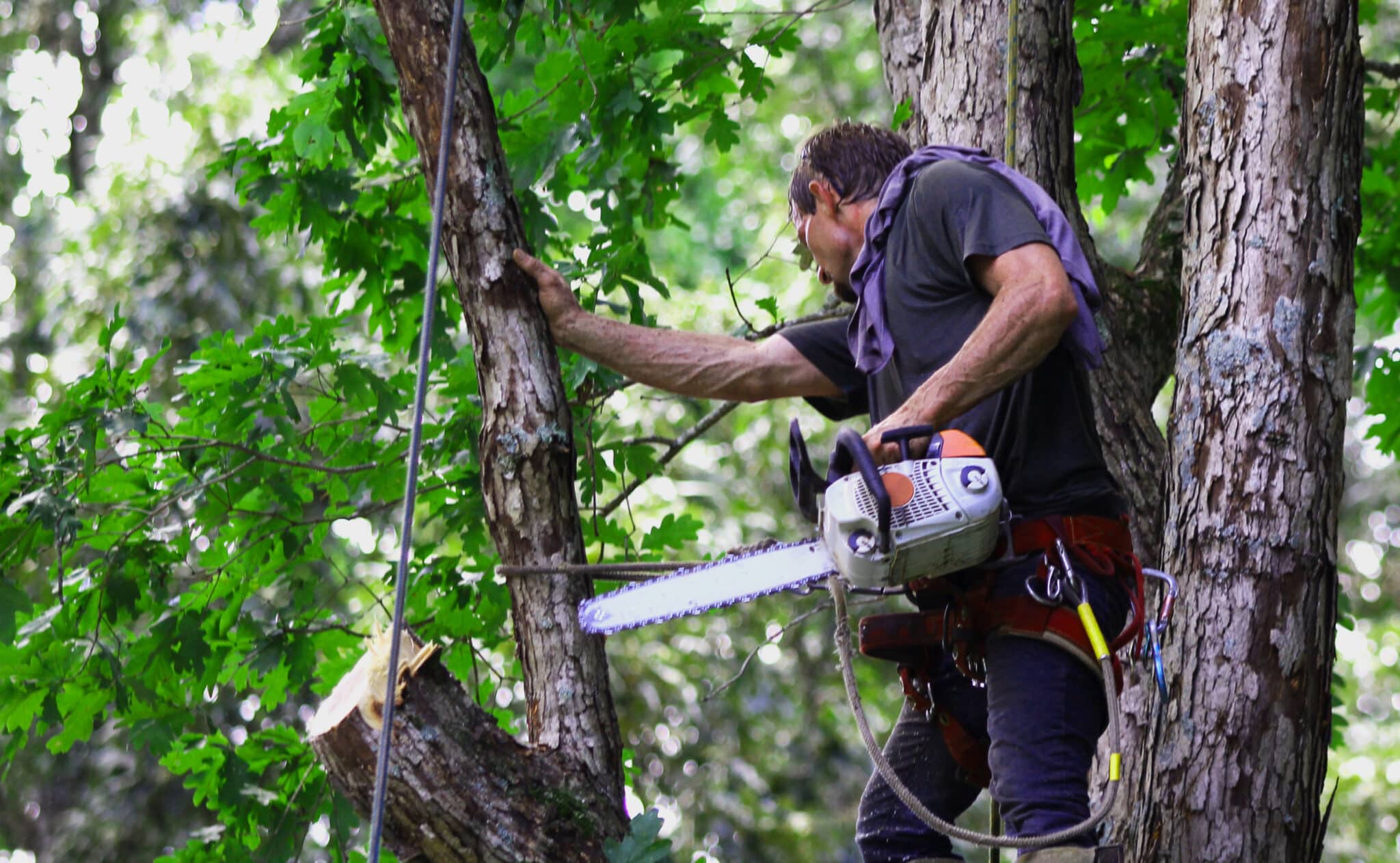
Subordination Cuts to Tame Co Dominant Stems
In the dynamic landscapes of Arlington, TX, and its neighboring cities like Fort Worth and Mansfield, trees add unparalleled beauty and value to our environment. However, the presence of co-dominant stems in trees can pose a significant risk to their health and safety. Subordination cuts emerge as a crucial technique in arboriculture to address this issue effectively. By strategically managing competing leaders, these cuts play a pivotal role in ensuring the longevity and stability of trees.
Subordination cuts are not just about removing parts of a tree, they are about making informed decisions that promote a tree’s structural integrity. When two stems vie for dominance, it can lead to weak points and potential failure points within the tree. Implementing subordination cuts helps to redistribute the tree’s energy, encouraging growth in a more desirable direction. This technique is especially beneficial in urban areas like Arlington, TX, where trees are an essential part of the landscape.
Understanding when and how to apply subordination cuts requires a deep knowledge of tree biology and physics. It’s a skill that professionals in the field, particularly in regions prone to storms like Fort Worth and Mansfield, TX, must master. The goal is to reduce the risk of tree failure, protect property, and ensure public safety, all while enhancing the natural beauty of the tree.
The beauty of subordination cuts lies in their ability to create a safer environment without compromising the health or aesthetic value of trees. As we delve deeper into the importance of managing competing leaders through subordination cuts, it becomes clear that this technique is indispensable in modern arboriculture. It’s a testament to the thoughtful balance between nature and human safety, ensuring that the trees in our communities continue to thrive for years to come.
Understanding Co-Dominant Stems in Trees
In trees, co-dominant stems often lead to structural weaknesses, making them susceptible to damage, especially in areas prone to severe weather. Subordination cuts come into play as a preventive measure, aiming to mitigate these risks by selectively reducing the growth of one stem in favor of another. This technique not only improves the tree’s overall stability but also its aesthetic appeal. Professionals in Arlington, TX, leverage this method to maintain the health and safety of urban trees.
Understanding the biology and mechanics behind co-dominant stems is crucial for effective subordination. These stems, growing closely together, compete for resources, light, and space, which can stress the tree and lead to potential failure. By applying subordination cuts, arborists redirect the tree’s energy towards the development of a stronger, more dominant leader. This strategic intervention helps ensure the tree’s longevity and resilience against the unpredictable weather in Fort Worth, TX.
The process of making subordination cuts requires precision and knowledge of tree growth patterns. Arborists assess the tree’s structure, identifying which stem should be subdued to promote healthier growth. The selected cut reduces the competitive stem’s vigor, allowing the dominant stem to thrive and become more robust. This method is particularly beneficial in Mansfield, TX, where maintaining tree health is essential for landscape beauty and property safety.
Ultimately, subordination cuts are a testament to the delicate balance between human intervention and nature’s course. By carefully managing co-dominant stems, arborists enhance the tree’s structural integrity, ensuring it can withstand the elements and continue to grace our landscapes. This practice underlines the importance of professional tree care in preserving the natural beauty and safety of our communities.
The Basics of Subordination Cuts
Subordination cuts stand as a fundamental technique for arborists aiming to maintain the health and structure of trees. This method involves making precise cuts to reduce the growth of one co-dominant stem, thus favoring the other. By doing so, trees not only become more stable but also grow in a way that’s aesthetically pleasing. It’s a practice that requires a keen understanding of tree anatomy and growth patterns, ensuring the right decisions are made for each tree’s well-being.
When applying subordination cuts, the goal is to identify which of the competing stems should be subdued to allow the other to become more dominant. This decision is critical in preventing the development of weak points that could lead to tree failure. Arborists carefully assess each situation, taking into account the tree’s overall health, the direction of growth, and the potential impact on its stability. This approach helps trees in cities like Fort Worth, TX, to withstand severe weather conditions, contributing to a safer urban environment.
The technique of subordination cuts is not just about cutting, it’s about promoting healthy growth and resilience in trees. After the cut, the tree directs more resources to the favored stem, encouraging it to grow stronger and more robust. This process is essential for the long-term health of the tree, ensuring it can continue to thrive and enhance the beauty of landscapes in Mansfield, TX. Arborists play a key role in this, using their expertise to make informed decisions that benefit both the tree and the community.
In conclusion, subordination cuts are a vital tool in the arborist’s toolkit, designed to manage competing leaders in trees effectively. Through careful planning and execution, these cuts help ensure the longevity and stability of trees, making them a crucial practice in urban tree care. By prioritizing the health and safety of trees, arborists contribute significantly to the natural beauty and safety of our communities, demonstrating the importance of professional tree care in maintaining our urban landscapes.

How Subordination Cuts Enhance Tree Health
Subordination cuts significantly boost a tree’s health by guiding its growth in a more sustainable direction. When arborists in Arlington, TX, implement these cuts, they encourage a tree to develop a single, strong leader. This process reduces stress on the tree’s structure, preventing the likelihood of breakage during storms. As a result, the tree becomes more resilient and less prone to disease.
In Mansfield, TX, the application of subordination cuts is a key strategy for enhancing the visual appeal of trees. By selecting a dominant stem and promoting its growth, trees achieve a more balanced and natural shape. This not only contributes to the aesthetic value of the landscape but also supports the tree’s overall health. A well-shaped tree is better equipped to access sunlight and resist environmental stresses.
The technique of making subordination cuts also plays a crucial role in extending the lifespan of trees. It allows trees to focus their energy on the growth of a primary leader, which leads to a stronger and more durable structure. Trees in Fort Worth, TX, benefit from this practice, as it helps them withstand the challenges posed by urban environments and changing weather patterns. This thoughtful intervention ensures that trees continue to provide shade, beauty, and habitat for urban wildlife.
Moreover, subordination cuts are an essential part of preventive tree care. They address potential problems before they become major concerns, saving time and resources in the long run. By maintaining the structural integrity of trees, arborists help protect property and ensure public safety. This proactive approach underlines the importance of professional tree care in creating healthier, safer urban spaces.
Identifying When Subordination Cuts Are Necessary
Identifying when to apply subordination cuts is a critical aspect of tree maintenance that requires a keen eye and a deep understanding of tree physiology. Arborists in Fort Worth, TX, are trained to recognize the signs that indicate a tree could benefit from this technique. These signs include the presence of two or more stems of similar size competing for dominance, which can weaken the tree’s structure. Early intervention with subordination cuts can prevent these issues from escalating, ensuring the tree grows healthy and strong.
In Mansfield, TX, professionals also look for signs of stress in trees, such as uneven growth patterns or branches that are overextended. These are indicators that a tree might be struggling to allocate its resources effectively. By applying subordination cuts, arborists can redirect the tree’s energy towards the development of a single, dominant leader. This not only stabilizes the tree but also promotes a more natural and aesthetically pleasing growth pattern.
Timing is everything when it comes to subordination cuts. Performing these cuts at the right time of year can maximize their effectiveness and support the tree’s natural healing process. Ideally, these cuts are made during the dormant season when the tree is not actively growing. This timing reduces stress on the tree and allows it to recover more efficiently, setting the stage for vigorous growth in the spring.
Lastly, understanding the long-term impact of subordination cuts is essential for any tree care strategy. These cuts are not a one-time solution but part of an ongoing maintenance plan to support the tree’s health and stability. Regular assessments by trained arborists can determine if additional cuts are necessary as the tree matures. This proactive approach ensures that trees in urban landscapes continue to thrive, contributing to the community’s well-being and safety.

Step-by-Step Guide to Making Subordination Cuts
Making subordination cuts begins with a thorough inspection of the tree to identify which stems are competing for dominance. This crucial first step ensures that the arborist targets the correct stem for reduction, promoting healthier growth in the remaining leader. In Fort Worth, TX, professionals often encounter trees with multiple co-dominant stems, making this initial assessment key to successful intervention. By focusing on the tree’s structure, arborists can make informed decisions that will benefit the tree in the long term.
After identifying the competing stems, the next step involves carefully making the cut on the selected stem to reduce its dominance. The cut should be precise and made at a point that encourages the tree to direct more energy to the favored stem. This technique requires skill and understanding of tree biology to ensure that the cut supports the tree’s natural growth patterns. In Mansfield, TX, arborists use specialized tools and techniques to perform these cuts, minimizing stress on the tree and promoting a quick recovery.
Following the cut, it’s important to monitor the tree’s response to ensure it is directing growth as intended. Observing the tree over the following months will provide valuable insights into the effectiveness of the subordination cut. If the tree responds well, the dominant stem will show increased growth and vigor, a sign that the tree is developing a stronger, more stable structure. This ongoing assessment is crucial for adjusting the care plan as the tree matures, ensuring its health and stability.
Lastly, maintaining a schedule for regular tree inspections is essential for identifying when further subordination cuts may be necessary. As the tree grows, new co-dominant stems may emerge, requiring additional intervention. By keeping a close eye on the tree’s development, arborists can apply subordination cuts proactively, preventing future structural issues. This preventative approach is a cornerstone of professional tree care, ensuring that trees remain a beautiful and safe part of our urban landscape.
The Role of Subordination Cuts in Risk Management
Subordination cuts play a pivotal role in managing tree risks, especially in urban areas like Fort Worth, TX, where the potential for property damage is high. By selectively reducing the growth of competing stems, these cuts ensure that a tree grows more predictably and safely. This technique not only preserves the tree’s health but also protects nearby structures and people from the dangers of falling branches. It’s a strategic approach that combines safety with the natural beauty of the landscape.
In Mansfield, TX, the implementation of subordination cuts is a proactive measure to prevent future problems. Arborists identify potential risks early on, allowing them to intervene before issues escalate. This foresight minimizes the need for more drastic measures later, such as tree removal, which can be costly and detrimental to the environment. It’s a testament to the effectiveness of subordination cuts in maintaining the balance between urban development and nature.
The success of subordination cuts hinges on continuous monitoring and expert care. After the initial cut, arborists watch the tree’s response closely, adjusting their approach as needed to encourage the desired growth pattern. This ongoing attention ensures that the tree develops a strong, stable structure capable of withstanding the challenges of its environment. It’s a clear example of how targeted interventions can lead to long-term benefits for both the tree and the community.
Finally, the role of subordination cuts in risk management cannot be overstated. By addressing the issue of competing leaders, arborists help reduce the likelihood of tree failure, which in turn lowers the risk of damage to property and injury to individuals. This practice is essential in preserving the urban canopy, which provides countless benefits, from cooling cities to improving air quality. Through careful planning and execution, subordination cuts make our communities safer and more resilient.
Subordination Cuts vs. Other Pruning Techniques
Comparing subordination cuts to other pruning techniques highlights their unique benefits in tree management. Unlike general pruning, which focuses on removing dead or diseased branches to improve tree health, subordination cuts specifically target the growth pattern of trees. This method ensures a single, dominant leader emerges, which is crucial for the structural integrity of trees in Fort Worth, TX. It’s a strategic choice that supports the tree’s natural development and reduces potential hazards.
Other pruning methods, such as topping or crown reduction, can be more invasive and stressful for the tree. These techniques involve cutting back the tree’s crown to reduce its size, which can sometimes lead to undesirable growth patterns and weaken the tree. In contrast, subordination cuts encourage the tree to grow stronger and healthier by focusing its energy on a primary leader. This approach not only preserves the tree’s aesthetic appeal but also its long-term health.
The application of subordination cuts requires a deep understanding of tree biology and growth habits. Arborists in Mansfield, TX, use this technique to carefully guide the tree’s development, avoiding the indiscriminate removal of branches that can occur with other pruning methods. This precision ensures that the tree continues to thrive, contributing positively to the urban landscape. It’s a testament to the thoughtful consideration that goes into every cut made.
Ultimately, subordination cuts stand out as a specialized form of pruning designed to enhance the tree’s structure and stability. While other techniques are important for maintaining tree health and managing size, subordination cuts address the specific challenge of competing leaders. This method plays a crucial role in risk management, especially in areas prone to severe weather, making it an invaluable tool in the arborist’s repertoire for promoting safe and healthy urban forests.
Aftercare Tips for Trees Undergoing Subordination Cuts
After trees in Fort Worth, TX, receive subordination cuts, it’s vital to ensure they get the right aftercare to thrive. Watering the tree adequately helps it recover from the stress of pruning. Mulching around the base without touching the trunk retains moisture and regulates soil temperature. This supportive environment encourages the tree to direct growth towards the dominant leader.
In Mansfield, TX, monitoring for pest and disease is crucial after subordination cuts. Trees can be more vulnerable following pruning. Regular checks help catch any issues early, before they escalate. Applying appropriate treatments promptly can save the tree from further stress and damage.
Fertilization plays a key role in the tree’s recovery and growth post-subordination cuts. A balanced, slow-release fertilizer supports healthy development. However, it’s important to wait a few months before fertilizing to avoid overwhelming the tree. This patience allows the tree to adjust and use the nutrients effectively when it’s ready.
Lastly, scheduling follow-up inspections with a professional arborist ensures continued health and proper growth. They can assess if the tree is responding well to the subordination cuts. If necessary, they can make additional adjustments to support the tree’s structure and stability. This ongoing care is essential for the tree’s long-term health and safety.
Frequently Asked Questions
What are subordination cuts?
Subordination cuts are a tree pruning technique used to manage competing leaders. By shortening one stem, they encourage growth in the other, promoting a stronger structure. This method reduces risk by preventing branches from growing too large and competing. S&P Tree Service expertly applies these cuts to enhance tree health and safety.
How do subordination cuts help trees?
Subordination cuts help trees by promoting a balanced growth pattern. This technique allows one leader to thrive, reducing strain on the tree’s structure. S&P Tree Service uses these cuts to prevent potential damage from competing stems. Overall, the method supports healthier, more stable trees in Arlington, TX.
Can subordination cuts harm a tree?
When done correctly, subordination cuts do not harm a tree. In fact, S&P Tree Service ensures these cuts support tree health by managing growth. Improperly done, however, they could stress the tree. That’s why trusting experts like S&P Tree Service in Arlington, TX, is crucial for the best results.
When should you make subordination cuts?
Subordination cuts are best made during a tree’s dormant season, typically in late fall or winter. This timing helps prevent stress and disease. S&P Tree Service experts know exactly when and how to perform these cuts for optimal tree health. Trusting their experience ensures your trees in Arlington, TX, maintain a strong, balanced structure.
Why target co-dominant stems with subordination cuts?
Targeting co-dominant stems with subordination cuts is crucial for tree health. This approach prevents the stems from competing for resources, ensuring one becomes the main leader. S&P Tree Service employs this technique to enhance stability and reduce the risk of breakage. By focusing on these stems, the tree achieves a stronger, more resilient structure.