

Habitat Sensitive Cuts for Urban Canopies
Key Takeaways About Habitat Sensitive Cuts
Habitat sensitive cuts are pruning choices that protect nests pollinators and tree safety at the same time. This summary is for homeowners and property managers deciding when to schedule pruning and how to balance safety with habitat needs.
- Identify active nests and pollinator hotspots before scheduling work.
- Prevent large wounds by using proper branch collar cuts.
- Avoid major removals during peak nesting and bloom periods.
- Spot decay and weak attachments with visual and moisture checks.
- Reduce disturbance by using low noise tools and smaller crews.
- Plan seasonal work around bloom and nesting calendars for protection.
Introduction
Urban tree trimming often forces a trade off between safety and wildlife habitat, and that trade off matters. Improper cuts can destroy nesting cavities and reduce flowers that feed pollinators. Homeowners notice fewer birds, more exposed branches, or messy crowns after routine pruning. In neighborhoods from Arlington, TX to nearby areas, those changes affect shade and property use.
City crews and contractors may prioritize clearance around power lines, roofs, and sidewalks. Those priorities are important for safety and property protection. But trimming that ignores nesting seasons or pollinator needs can cause long term ecological harm. The result leads to weaker tree structure and less urban biodiversity.
Habitat sensitive cuts balance human risks with wildlife needs using targeted pruning techniques. These cuts protect nesting sites, preserve floral resources, and keep trees structurally sound. A homeowner seeing sawdust, exposed cavities, or sudden branch loss should consider habitat impacts. Small planning changes at trimming time can make a big difference for pollinators and nesting birds.
Professional arborists diagnose habitat concerns by inspecting cavities, bloom timing, and branch decay. They also note pruning wounds, included bark, and branch attachment quality during an assessment. For properties in Prosper, TX a correct diagnosis prevents repeat damage and preserves canopy function. If safety risks exist, contact a certified tree professional rather than attempting repairs yourself.
Habitat Sensitive Cuts Explained Why They Work
Habitat sensitive cuts are pruning choices that protect nests, pollinators, and tree safety simultaneously.
- Reduce large wound areas.
- Preserve flowering branches.
- Avoid cavity removal when possible.
- Time cuts outside nesting peaks.
These cuts work by keeping specific structural elements intact so wildlife retains shelter and food sources. A homeowner often asks, “Will careful pruning still keep my tree safe?” Yes, targeted removals remove hazardous limbs while leaving habitat features intact. Professionals look for weak attachments and decay to decide which limbs pose real risks. That diagnostic approach prevents unnecessary loss of cavities and blossoms.
Arborists favor selective thinning and shortening instead of heavy topping when aiming for habitat sensitive cuts. Shortening reduces limb weight without tearing bark or removing branch collars that birds use. This method keeps canopy density enough for nesting cover and pollinator foraging. It also reduces the chance of new hazardous sprouts forming.
Inspectors confirm success by recording visible cues and test checks during and after pruning. They note cavity location, flowering branch retention, and wound size in a written report. A simple diagnostic check uses a moisture meter and visual decay signs to assess internal rot. For homeowners in Prosper, TX these checks guide decisions about acceptable risk versus conservation.
For step-by-step guidance on balancing safety and wildlife, consult resources about wildlife-friendly trimming practices. If cuts expose significant rot or create a safety concern, hire a professional rather than pruning yourself. A certified arborist will perform a hands-on inspection and provide a clear work plan. Contact a qualified tree service when hazards or complex habitat needs appear.
How Nesting Birds Use Urban Tree Canopies
Canopy layers offer different nesting options: dense outer foliage suits small songbirds while thick crotches and cavities attract larger species. Birds select branches based on shelter, visibility, and access to food within a few meters of the nest. Homeowners often see increased bird activity where mid-canopy density remains after trimming. Observing where birds land and forage helps plan habitat sensitive cuts before work begins.
Nesting timing and location vary by species, so nests may appear in surprising spots like forked limbs or beneath dense clusters of leaves. Some cavity nesters use existing holes created by decay rather than building open nests, making those cavities critical. A visual inspection that notes cavity size and entrance orientation helps protect those features during pruning. Professionals also check for active nests by looking for recent nest material, droppings, or adult birds returning to a site.
Foraging patterns matter because pruning can remove floral and insect resources that sustain adults and fledglings during nesting. Preserving flowering branches, small fruit clusters, and rough bark areas maintains food supply for pollinators and insectivorous birds. A simple diagnostic step is to record flowering branches and insect-rich foliage on a photo pass before cuts. Linking habitat work to broader preservation strategies can guide homeowners, as explained in the page about urban tree preservation.
Noise and repeated disturbance near a nest cause parents to abandon young, so timing work and using low-noise methods reduces that risk. Professionals confirm nest activity by observing for at least an hour across multiple days before pruning to avoid disturbance. In a common situation, homeowners spot adults carrying food and should delay trimming until fledglings leave the nest. If pruning may create a safety hazard, contact a professional who can balance risk and habitat protection with trained inspection steps.
Common Causes Of Nest Disturbance During Trimming
Heavy equipment near trunks often transmits vibrations that can collapse loose nests or frighten adult birds away temporarily. A professional inspects soil compaction and root plate movement to confirm whether machine traffic threatens structural roots. Visible root damage, heaving turf, or fresh root fractures signal a need to stop work and reassess cutting plans.
Over-pruning large scaffold branches removes shelter and removes branches that support cavities used by secondary nesters. An arborist confirms risk by measuring retained canopy cover and checking cavity orientation and entrance size with a tape measure. Shortening versus full removal preserves perch sites while reducing limb leverage that causes failure in storms. When cuts must be made on those limbs, professionals often recommend staged removals tied to structural objectives found in a structural canopy plan.
Removing flowering and fruiting twigs during peak bloom cuts off food resources for pollinators and fledglings at critical times of year. Inspectors compare bloom timing to local nesting calendars and record which branches produce nectar or small fruits during checks. A simple diagnostic involves photographing blooms before work and counting inflorescences per limb to guide selective retention. For larger canopy edits that affect both safety and habitat, see the guidance on structural canopy edits for balancing those needs.
Rushed pruning without multiple observations can split active nests from parent care when birds return to find sudden gaps. Professionals will watch suspected nesting areas across several mornings to confirm absence of feeding trips before any work begins. Audible signs like persistent calling or repeated wingbeats near a branch often indicate active nests needing protection.
Warning Signs Trees Need Habitat Friendly Intervention
Look for sudden changes in leaf density on one side of the canopy that leave exposed branches and reduce shelter for small birds. Inspect for clusters of dead twigs at branch tips which often signal internal stress or recent pest activity needing review. Note unexplained fresh wounds or large pruning scars that may remove nesting ledges and create decay entry points. If you observe these signs, schedule an assessment so cuts can be planned to protect habitat and safety.
- Visible cavity entrances under loose bark
- Clusters of flowerless or fruitless twigs
- New limb failures after storms
- Repeated bird or pollinator absence in a previously active tree
Listen for consistent alarm calls or persistent adult visits that indicate active nests requiring protection during work. A professional will watch arrival and departure patterns for at least an hour across multiple days to confirm activity. They will document locations with photos and mark branches to avoid with flagging or spray during pruning. This reduces the chance of accidental nest removal when crews work on the tree.
Look along branch collars and crotches for fungal fruiting bodies or soft wood when pressed, which show decay that may threaten structural integrity. A pro will probe suspect wood lightly and use a moisture meter to check interior conditions before deciding on removals. Measured cavity size and orientation factor into whether a cavity can remain without increasing risk to people or property.
Check for loss of flowering clusters or nectar sources after routine trims that can reduce pollinator visits through the season. If pruning removed blooms, ask the assessor about retention options like selective thinning or canopy-edge finesse to keep forage areas intact. A professional will compare pre- and post-trim photos and recommend targeted cuts that preserve floral stems and blossom timing. For detailed technique examples, review guidance about canopy edge finesse to see how small choices affect pollinator resources in urban trees near Arlington, TX.
Safe Pruning Techniques To Protect Pollinators
Start cuts at the branch tip and work back toward the trunk to avoid tearing bark and exposing large wounds. Make final cuts just outside the branch collar to preserve the tree’s natural defense and reduce decay risk. Use hand tools for small flowering stems to protect blossoms that pollinators visit during the season. For larger limbs, staged shortening removes weight without eliminating cavity-bearing scaffolds that some birds use for shelter.
Keep pruning noise and activity low near suspected nesting clusters by using quieter saws and smaller crews when possible around trees. Limit ladder time and foot traffic on root zones to prevent disturbance that flushes adults from nests and compacts soil. Photograph branches before cutting and mark retention targets with flagging so crews avoid pollinator-rich twigs. A professional will confirm active nests by watching arrival patterns for multiple mornings prior to any disruptive work.
Favor selective canopy thinning over wholesale crown reduction to maintain airflow while preserving dense foraging patches for bees and other pollinators. Thinning targeted limbs reduces wind load and failure risk while leaving flower-bearing branchlets intact for seasonal nectar. Professionals often pair thinning with careful pruning cuts to keep wound size small and recovery fast. See guidance on canopy thinning for techniques that balance structure with habitat retention.
When removing hazard limbs near houses or sidewalks, place temporary barriers to keep people back while work proceeds to limit disturbance near nests. Use a moisture meter and visual checks to confirm internal decay prior to removing cavity-bearing wood that might host species. Record post-prune photos and notes showing retained floral stems and avoided cavities for homeowner records.

When Homeowners Should Call A Professional Service
If you notice rapid twig loss, persistent swinging limbs over structures, or visible deep decay, call a professional for a focused assessment. A trained arborist will inspect attachment points, probe suspect wood, and use a moisture meter to check interior condition. They will also document active nesting signs over several observations to avoid accidental disturbance during work. For homeowners in Prosper, TX, this measured approach prevents rushed removals that harm both safety and habitat.
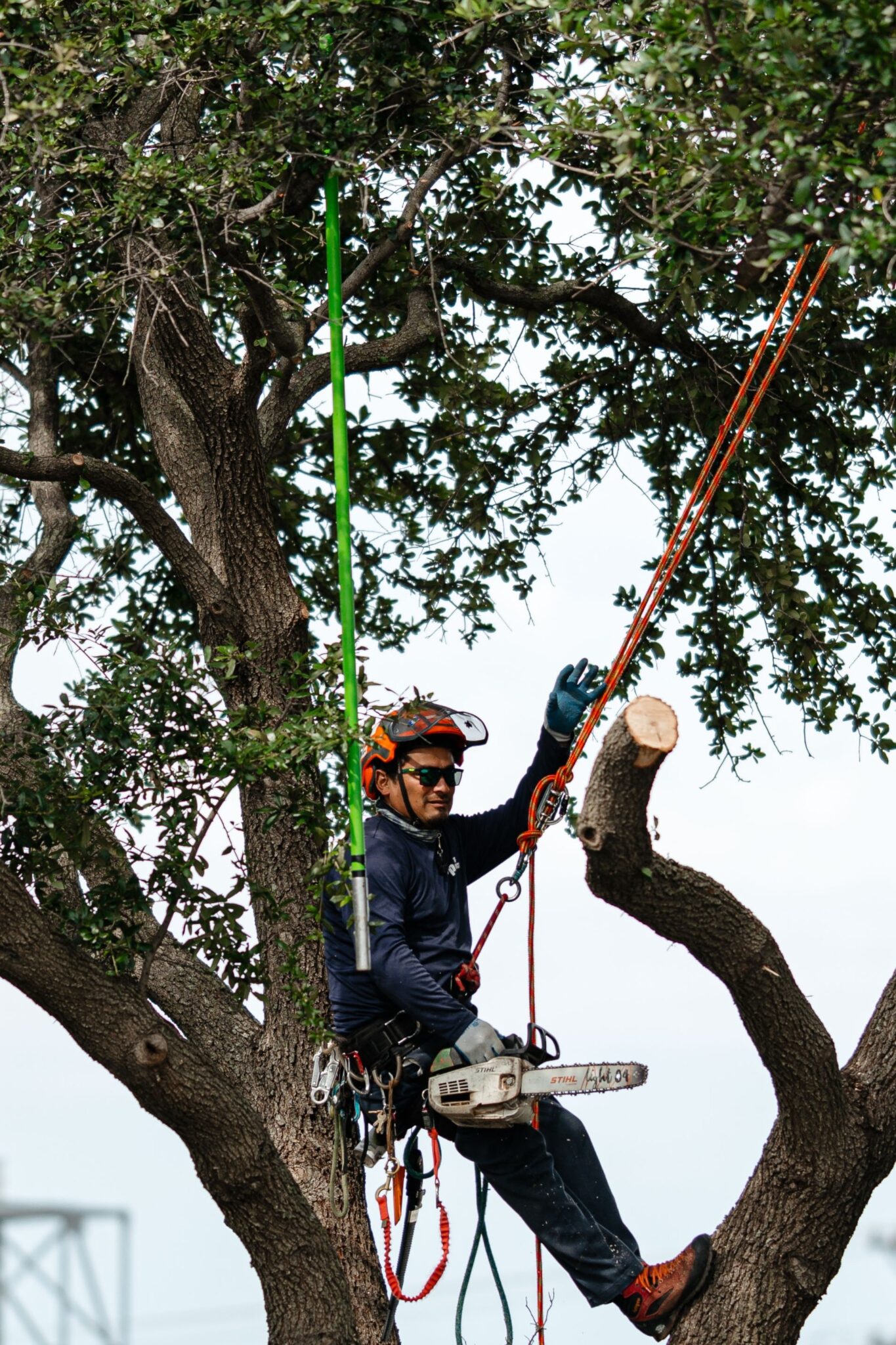
When access or fall risk is high, professionals bring rigging and trained climbers to remove hazards without harming nearby habitat features. They can perform precise branch shortening or select removals that preserve cavity-bearing scaffolds while eliminating failure risk. A crew will stage cuts and use containment methods so falling limbs do not crush flowering branches used by pollinators. Request a written plan showing which branches will be removed and which will remain for wildlife value.
If trimming will affect large flowering limbs or fruiting clusters that sustain pollinators during nesting, seek a pro who coordinates timing with species activity. Expect the diagnostician to mark retention targets and to follow a branch-by-branch plan similar to professional branch thinning practices. Ask for before-and-after photos and notes about cavity avoidance so you can see the habitat-sensitive choices made on your property. This documentation helps homeowners make informed follow-up decisions about future seasonal work.
Call sooner when a tree leans more than it did before, when new cracks appear, or when neighbors report falling debris onto shared spaces. The professional will use simple tests, such as sounding trunks, probing decay, and measuring crown asymmetry, to confirm risk levels. If active nests exist, they will delay disruptive work or use low-noise methods to minimize disturbance while still addressing hazards. When in doubt about safety or habitat value, contact a qualified tree service for an on-site evaluation in Arlington, TX.
Planning Seasonal Work Around Wildlife Life Cycles
Plan seasonal work by mapping key wildlife windows on a simple calendar before scheduling crews. Note flowering peaks, nesting months, and migration pulses for your tree species. Use short observation sessions to confirm active use rather than relying on calendar estimates alone. When active use appears likely, shift nonurgent work until activity declines to reduce disturbance risks.
- Mark likely nesting areas on the calendar.
- Avoid major limb removals during peak nesting months.
- Schedule minor touch-ups in late season windows.
- Coordinate work around pollinator bloom periods.
For routine maintenance, reserve low-impact tasks like light pruning and debris pickup during sensitive months. These tasks remove hazards while keeping noise and vibration low near nests and pollinator patches. Use targeted crown touch-ups timed to when birds are not nesting and flowers are not blooming. A focused crown touch-up can remove small hazards without broader ecosystem disruption.
Professionals diagnose timing needs by observing arrival patterns, counting flower clusters, and recording pollinator visits before cutting. They may perform a short, repeated observation across mornings to confirm nest absence. Inspectors also check branch bloom density and cavity entrances to guide which limbs to protect.
Simple Yard Practices To Support Urban Tree Habitat
Create simple pollinator pockets by leaving small clusters of flowering twigs uncut around the yard. Position these clusters near shrubs or garden beds so bees and butterflies can move between nectar sources easily. Avoid mowing or blowers over these pockets during peak bloom to prevent accidental damage or pollen loss. Mark the areas with small stakes so crews recognize and avoid them during routine work.
Keep a shallow layer of leaf litter beneath trees to provide insect habitat and nesting material for ground-nesting bees. Rake leaves into loose piles rather than removing them entirely, and move piles away from high-traffic zones to reduce safety concerns. Check piles periodically to ensure no hazardous debris or tripping risk develops near walkways. If piles attract rodents or create hazards, contact a professional for safe removal advice.
Choose native flowering plants for under-canopy plantings to extend nectar availability and reduce watering needs for homeowners. Native species bloom at times that often align with local pollinator life cycles, providing reliable food during nesting periods. Plant placement should avoid root damage to trees, keeping beds at least outside the dripline to protect feeder roots. A horticultural professional can recommend suitable species and planting distances for your trees.
Train lawn-care crews to follow habitat friendly cutting patterns and to avoid topping flowering branchlets during routine trimming. Share simple photos or a short diagram showing where to leave blossoms and which branches host pollinator forage. Encourage crews to use quieter equipment and limit vibrations near likely nest sites, reducing disturbance during sensitive periods. For more on precise pruning execution, see the guidance about branch cutting techniques.
Monitor trees for nesting activity and pollinator visits by keeping a brief log of sightings and bloom counts throughout the Texas season. Note increases or declines and share results with your arborist to adjust future trimming windows and retention choices. Use a moisture meter or simple visual checks to watch for trunk or root stress that could force more aggressive cuts later. When uncertain about safety or habitat trade-offs, request a professional inspection before making major changes.
Frequently Asked Questions
How do habitat sensitive cuts protect nesting sites?
Habitat sensitive cuts leave live branches and cavities that birds and pollinators use for nesting and shelter during breeding seasons. Crews prune selectively to preserve branch clusters and secure perching sites while reducing hazardous limbs near structures. Inspectors check for active nests and visible insect activity before cutting, and they delay work if needed to protect wildlife. If work involves climbing or large removals, exercise caution and hire a professional to avoid injury and accidental nest loss.
When should I schedule trimming to avoid pollinator loss?
Schedule major trimming outside peak nesting and bloom times, typically late fall through early winter in many regions. Conduct inspections in early spring to confirm active nests or flowering before any work begins. Use habitat sensitive cuts when trimming near known pollinator plants and avoid removing dense flowering branches. If trees require work near nests or at height, use a professional to reduce harm and address safety risks.
What signs indicate a tree needs habitat-aware pruning?
Look for visible nests, dense foliage pockets, or heavy insect activity that suggest active bird or pollinator use in branches. Excess deadwood, cracked limbs, or rubbing branches can increase failure risk but still host wildlife. Yellowing leaves, sudden dieback, or sap flow may signal disease and need careful assessment before Habitat sensitive cuts. If limbs pose hazards or high-up work is required, caution and hire a professional arborist for safe, wildlife-aware pruning.
Can habitat sensitive cuts still remove hazardous limbs?
Yes—habitat sensitive cuts can remove hazardous limbs while preserving nesting and pollinator sites when planned carefully. Arborists inspect the tree for cracked trunks, hanging branches, and decay before choosing which limbs to remove. They use targeted pruning cuts and timing to avoid nesting seasons and protect cavities and flowering branches. If limbs are near people, structures, or power lines, contact a professional because the removal carries safety risks.
How will a pro confirm active nests before cutting?
A certified arborist inspects trees for active nests by observing bird behavior, droppings, feathers, and fresh nesting material. They use binoculars and close visual checks from safe distances to avoid disturbing wildlife. If nest activity is suspected, they may postpone work or adjust Habitat sensitive cuts to protect the site. For medium-risk or high branches, hire a professional because climbing and cutting near nests carry safety and legal risks.