

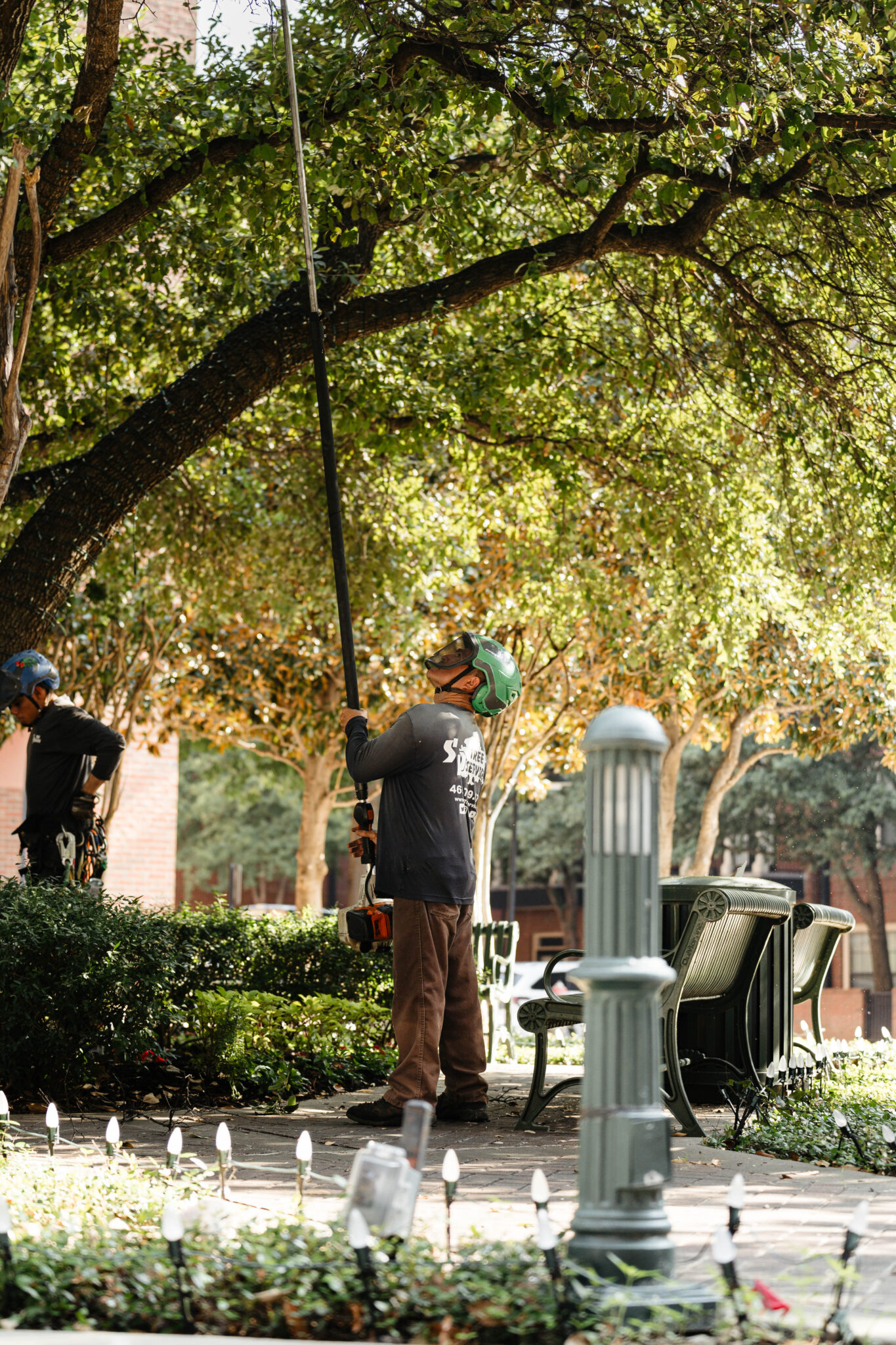
Sidewalk Canopy Lift for Clear Walkable Streets
Key Takeaways About Sidewalk Canopy Lift
A sidewalk canopy lift raises lower branches to keep walkways clear and protect tree structure. This guide is for homeowners and property managers who need safe pedestrian clearance and long term tree health.
- Identify lower scaffold limbs that interfere with sidewalks and fixtures.
- Prevent excessive live crown removal by planning staged lifts.
- Avoid cutting into the branch collar to reduce decay risk.
- Spot signs of decay or weak crotches before making cuts.
- Reduce trip and collision hazards by maintaining 8 to 12 feet.
- Plan follow up inspections to monitor regrowth and wound closure.
Introduction
Sidewalk canopy lift is a targeted pruning practice that raises low branches to keep walkways clear and safe. Low limbs can block sightlines, scrape heads, and trap leaves against paving. When branches hang over sidewalks they can create hazards for pedestrians and cyclists. Property owners in Arlington, TX often notice stems rubbing against awnings or blocking light to sidewalks.
Beyond immediate clearance, poor pruning choices can harm a tree’s structure and long term health. Removing the wrong limbs or cutting too close to the trunk stresses the tree and invites decay. A good canopy lift maintains a natural form while removing conflict with foot traffic. Homeowners in Fort Worth, TX see the difference when pruning preserves branch spacing and healthy bark.
Diagnosing low canopy issues starts with observing branch angles, wound size, and bark condition near the sidewalk. Professionals inspect scaffold limbs, crotch angles, and any included bark that signals weak unions. They also note signs of disease, dead wood, or bark damage that affect pruning decisions. A clear inspection report helps decide how much lift is safe for the tree.
Proper techniques focus on selective limb removal, crown raising, and respecting branch collar tissue during cuts. The aim is to balance clearance with the tree’s ability to compartmentalize wounds and regrow evenly. Poor cuts or excessive removal increase storm damage risk and pest entry points. If you notice frequent interference with pedestrians, consider a professional assessment before trimming.
What Sidewalk Canopy Lift Involves And Why It Works
Sidewalk canopy lift means pruning lower limbs to raise a tree’s clearance while protecting its health and structure. Technicians plan cuts that preserve the branch collar and avoid leaving stubbed ends. This process reduces pedestrian contact and improves sightlines along walkways. A common homeowner question is how much clearance is safe, professionals typically recommend enough height for comfortable passage and maintenance equipment.
- Identify scaffold branches to keep
- Remove crossing or rubbing limbs
- Make cuts at the branch collar
- Limit total live crown removal
- Evaluate for future growth direction
Work begins with an inspection of branch attachments, bark condition, and limb angle to confirm which limbs to remove. A pro will test for decay by looking for hollow sounds and loose bark, then probe suspect areas gently with a tool. They also note nearby utilities and structures before planning each cut to avoid new conflicts. For homeowners in Fort Worth, TX this step prevents repeated trimming from regrowth in the same area.
Cuts follow three basic techniques: selective limb removal, reduction cuts, and crown thinning near the sidewalk edge to balance weight and light. Each cut type serves a purpose: removal clears space, reduction shortens length, and thinning opens the canopy for air and light. Proper cuts respect the branch collar to help the tree seal wounds and prevent decay. Residents in Arlington, TX often see better long-term form when these techniques are used instead of topping.
Common Causes Of Low Branches Over Walkways
Low branches over sidewalks often start because young trees were planted too close to walkways, limiting natural vertical clearance as they grow. Competition for light can force lower limbs to stay vigorous instead of dying back, creating persistent obstruction. Soil compaction from foot traffic can reduce root oxygen and change growth patterns toward lower branching. For homeowners in Fort Worth, TX this is a frequent observation on narrow planting strips next to paved paths.
Another common cause is uneven pruning history, where routine cuts removed upper foliage but left lower scaffold limbs intact. That pruning bias encourages lateral growth near eye level and creates heavy lower branches that resist simple lifting. Insects or localized disease can also weaken specific branches, causing others to overcompensate by growing lower and denser. When decay or insect activity is suspected, a professional inspection provides clarity before aggressive pruning.
Site conditions like shade from nearby structures or taller trees often push lower limbs to remain leafy and extend over sidewalks. Trees adapt to available light by maintaining branches where photosynthesis yields the most benefit, which can be at pedestrian height on shaded streets. Root damage from utilities or construction can alter crown symmetry and shift branch distribution toward one side. Observing where leaves are densest helps a pro decide which limbs to remove during a canopy lift.
Finally, species habit plays a major role, some trees naturally hold lower branches longer than others and need planned crown raising earlier. Fast-growing species may require periodic selective removal to prevent heavy lower limbs that create hazards. A trained arborist will compare branch attachment strength, crotch angles, and wound response when recommending a lift. For more on the technique professionals use, review the guidance on crown raising.
Warning Signs Indicating Immediate Pedestrian Hazard
Visible drooping limbs that hang at pedestrian height signal an immediate hazard and need prompt attention. Look for branches that brush clothing, carry leaves onto walkways, or block exterior lights. Cracks at branch unions or split crotches often precede sudden failure and create a clear safety concern. A professional inspection will confirm whether the branch attachment can hold weight or if removal is required.
Dead wood over sidewalks increases risk because brittle limbs fail without warning, especially after wind or rain. Brown leaves, brittle twigs, and hollow-sounding wood when tapped are useful homeowner checks before calling a pro. If you notice peeled bark and sunken or soft wood at the base of a limb, decay may be present. Technicians use sounding, probing, and targeted pruning to verify the extent of decay before making removal decisions.
Rapid branch movement in storms or persistent rubbing against awnings suggests poor branch structure and elevated failure risk for pedestrians. When limbs show recent fracture lines or fresh wound wood, the hazard is current and not a future concern. A diagnostic inspection often includes checking scaffold branch angles, wound size, and any included bark that weakens the union. For properties in Fort Worth, TX this type of check helps prioritize urgent pruning work near busy walkways.
Frequent littering of twigs or fruit directly onto sidewalks can indicate decline or excessive weight in the lower crown requiring immediate action. If pedestrians report scraping sounds or you see repeated contact marks on fixtures, consider professional evaluation. Professionals may recommend targeted crown raising or selective removal with attention to preserving the tree’s long-term structure. Learn more about careful edge pruning and trimming techniques at canopy edge finesse.

Pruning Techniques To Raise Branches Safely
Start cuts with selective crown raising that removes whole limbs back to a lateral branch or trunk to preserve structure and growth habit. Make reduction cuts only when necessary to shorten a limb without leaving a stub or cutting into the branch collar. Use hand pruners for small shoots and a pruning saw for branches over 1 inch in diameter to keep cuts clean. After each cut, inspect the remaining branch collar for proper orientation and intact bark to aid wound closure.
- Choose cuts that leave a healthy lateral branch.
- Remove no more than 25 percent of live crown at once.
- Make final cuts just outside the branch collar.
- Avoid flush cuts that damage the trunk.
- Thin crowded limbs to reduce sail effect in wind.
When raising a canopy, sequence pruning from the outermost lower limbs inward so weight shifts gradually across the crown. Balance matters, remove opposing limbs in stages to avoid unbalancing the tree and causing lean or split. For larger cuts, a professional will use lowering techniques rather than dropping heavy limbs onto sidewalks or structures. Consider nearby utilities and fixtures in Arlington, TX before cutting to prevent accidental contact or property damage.
Watch wound size and timing, make major lifts during the tree’s dormant season when possible to reduce stress and pest attraction. After pruning, monitor for epicormic sprouts that may form at cut sites and plan follow-up thinning rather than aggressive topping. A professional inspection can record cut locations and recommend periodic maintenance intervals for long-term canopy health. Homeowners in Fort Worth, TX should schedule follow-ups if sprouts or decay appear after a lift.

When Homeowners Should Call A Professional Service
Call a professional when the work requires climbing, rigging, or cutting near electrical lines to avoid serious injury or property damage. Professionals bring harnesses, ropes, and lowering systems to control large limb removal safely. If you observe large cavities or decayed wood near the sidewalk, a trained crew can evaluate structural risk and remove hazardous limbs with controlled descents. Homeowners should avoid DIY cuts that leave heavy stubs or create unstable weight shifts on remaining branches.
Engage a pro when trees show recent changes in posture or sudden leaning that suggest root problems or soil movement. A qualified arborist will check root flare exposure, probe for decay, and test stability with a measured inspection. They can recommend targeted lifts or selective removals while documenting findings for future monitoring and maintenance plans. For complex site access or narrow corridors, crews coordinate lowering paths to protect sidewalks and nearby structures.
When repeat trimming is needed every season because lower limbs regrow into the walkway, call a service to develop a long-term plan rather than repeated short cuts. A professional will assess growth patterns, species habit, and spacing to schedule strategic lifts and thinning that reduce future work. They can also install and follow a documented monitoring program to track wound closure and regrowth over time. This approach limits repeated stress and helps maintain a healthy, stable crown.
If the job involves preserving specimen trees while creating clearance, hire an arborist skilled in minimal-impact pruning and tree-health follow up. They will balance limb removal with the tree’s ability to compartmentalize wounds and avoid unnecessary crown reduction. After work, request a written report and an inspection schedule so you can watch recovery and detect epicormic shoots or delayed decay. Properties in Fort Worth, TX and Arlington, TX often benefit from this documented care and periodic tree-health monitoring.
How Professionals Assess Trees For Canopy Lift
Arborists begin with a visual sweep of the trunk, scaffold limbs, and the immediate sidewalk corridor to spot hidden defects. They note wound size, bark separation, and any decay visible at branch unions before planning cuts. A professional also evaluates how previous pruning altered branch distribution to predict how the crown will rebalance. This assessment guides whether gradual lifts or staged removals better protect long-term structure.
Next, technicians perform simple hands-on tests like sounding limbs with a hammer and gently probing suspect wood for soft spots. They check branch taper and crotch angle to estimate attachment strength without using invasive measures. Inspectors also measure clearance needed for pedestrians and maintenance equipment to set target lift heights. Those measurements influence which branches to remove and which to retain for future growth.
Part of the inspection includes mapping nearby obstructions such as lighting, signs, and utility lines to plan safe lowering paths during cutting. When sightlines are a concern, professionals refer to proven pruning approaches like the sightline pruning methods to keep travel corridors clear without excessive crown loss. They record cut locations and expected regrowth patterns to minimize repeated interference. This documentation helps homeowners track recovery after the work.
For complex cases, crews may perform an aerial inspection from a bucket or while climbing to view inner scaffold attachments closely. In those situations workers inspect for internal decay, included bark, and signs of past repair that affect cutting choices. A written diagnosis often includes photos, recommended target heights, and a phased pruning plan. Homeowners in Fort Worth, TX benefit from this level of detail when budgeting and scheduling follow-up maintenance.
Preventive Maintenance To Keep Sidewalks Clear
Establish a routine inspection schedule to catch low-growth before it reaches sidewalks and creates hazards for pedestrians. Check clearance at different times of year to account for seasonal leaf growth and flowering. Record simple measurements and photos during each visit so professionals can compare regrowth and recommend timing. When inspections show repeated sprouting, plan maintenance rather than one-off heavy cuts to protect the tree.
- Inspect clearance every six to twelve months.
- Note new sprouts and vigorous lower shoots.
- Take photos from the same spot each time.
- Measure vertical clearance at the sidewalk edge.
Use targeted, small pruning sessions to limit wound size and reduce stress on the tree during maintenance cycles. Remove shoots at their base and avoid leaving stubs that encourage weak regrowth or decay. For guidance on proper cutting locations and angles, consult resources about branch-cutting techniques before doing major work. Professionals can advise when to shift from maintenance pruning to a staged canopy lift for long-term form.
Manage site factors that encourage low branching by reducing competition for light near the trunk and managing irrigation patterns. Mulch rings and correct watering help roots stay healthy, reducing the tree’s need to maintain low lateral branches for survival. Monitor nearby structures or signs that attract growth toward the sidewalk and address those influences when planning maintenance. In Arlington, TX and Fort Worth, TX properties this regular attention prevents frequent pedestrian conflicts and preserves tree form.
Practical Homeowner Steps For Temporary Solutions
Start with a quick safety check before any temporary action: look for hanging dead wood, nearby power lines, and unstable branches that could fall. If any hazard exists, stop and contact a professional to avoid injury or property damage. For non-hazardous limbs, use a hand saw or bypass pruners to remove small shoots at their base, keeping cuts clean and close to the branch collar. Wear eye protection and gloves while working near walkways to reduce risk from falling debris.
When you need short-term clearance for pedestrians, gently lift flexible lower shoots upward and secure them temporarily with soft tree straps to a higher limb. Do not pull hard or tie directly to the trunk since that can damage bark and cambium tissue. Check strap tension daily and remove ties within a few weeks to prevent girdling and allow natural repositioning of branches. Monitor tied branches for signs of stress like wilting or leaf drop and remove ties sooner if symptoms appear.
For quick debris control after storms, clear small broken twigs and leaf piles from the sidewalk to prevent slipping hazards and maintain visibility along the path. Use a rake and hand pruners for minor cleanup and bag material for municipal pickup or composting according to local rules. If larger limbs block the walk, keep bystanders away and mark the area until professionals can remove them safely. Taking photos of damage helps professionals assess the situation and plan repairs if needed.
If you need guidance on how much lift is safe or how to stage temporary measures, reference a professional tree-structure review or schedule an inspection to confirm steps. A basic evaluation includes checking scaffold limb attachments, branch collar condition, and target clearance height for pedestrians. In Arlington, TX and Fort Worth, TX properties, this simple diagnostic helps homeowners choose temporary actions that avoid long-term harm. When in doubt about structural soundness, prioritize a professional assessment over further DIY pruning.
Frequently Asked Questions
What is a sidewalk canopy lift and why is it needed?
A sidewalk canopy lift raises low-hanging branches to increase clear height over walkways while keeping tree form intact. Arborists remove select lower limbs and thin dense areas to improve pedestrian clearance and light penetration. This work reduces collision risk, improves accessibility, and can limit branch weight that stresses stems. If branches are large or near power lines, exercise caution and hire a professional to assess and perform the lift.
How high should branches be raised for safe pedestrian clearance?
Raise lower branches so the lowest live limbs sit at least 8 feet above the sidewalk to clear pedestrians and small vehicles. For areas with delivery trucks or utility access, aim for 10 to 12 feet where clearances allow. Preserve tree health by removing no more than 25 percent of live crown during a single Sidewalk canopy lift and avoid cutting large scaffold limbs. If work involves climbing or power tools, exercise caution and hire a professional arborist to reduce risk of injury and tree damage.
When should I call a pro for a sidewalk canopy lift?
Call a pro when branches hang low enough to block pedestrian paths or create repeated trim needs you cannot safely manage. If branches are over sidewalks and higher than shoulder level but below 8 feet, consult an arborist for a Sidewalk canopy lift. If the tree has large limbs, signs of decay, pests, recent storm damage, or you need a lift near power lines, do not attempt DIY work. Caution: working above walkways carries fall and limb hazards, so hire a trained professional with proper equipment and insurance.
How does a canopy lift protect tree health and structure?
A properly performed sidewalk canopy lift preserves a tree’s structural framework by removing lower growth while keeping scaffold branches intact. Technicians prune live branches back to healthy lateral branches or collars to avoid large wounds and decay. This reduces limb weight and wind leverage, lowering risk of splitting or trunk damage over time. If work involves climbing or heavy limbs, exercise caution and hire a professional to prevent injury and accidental tree harm.
Can temporary fixes keep sidewalks clear until a lift is scheduled?
Yes — short-term measures can keep walkways usable until a sidewalk canopy lift is scheduled, but they are temporary solutions. Tying back small limbs or trimming obvious trip hazards can improve clearance without harming major branches. Always exercise caution around ladders and tools, and avoid cutting limbs larger than two inches in diameter. For safer, lasting work and to avoid injury, contact a professional arborist or tree service.