


ANSI A300 Pruning, What Homeowners Should Know
Key Takeaways About ANSI A300 Pruning
ANSI A300 Pruning is a set of plain-language standards that show how to cut trees to protect health and safety. This guide helps homeowners and property managers decide when to call a pro and what to expect during inspections and work.
- Identify damaged limbs decay and poor previous cuts with visual checks.
- Prevent excessive crown loss by spacing follow up visits over seasons.
- Avoid flush cuts and stubs to protect the branch collar and cambium.
- Spot signs of internal decay using sounding probes and photographed evidence.
- Reduce risk near structures by planning cut sequences and rope control.
- Plan phased corrective pruning to encourage strong scaffold branch development.
Introduction
Pruning affects tree health, safety, and how long a tree lives when done correctly. ANSI A300 Pruning explains industry standards many arborists follow. Homeowners often notice messy cuts, weak limbs, or excessive branch density. Those visible issues can hide decay, pest access, and structural risk around homes.
Many homeowners in Fort Worth and Midlothian hire pros after seeing cracked limbs or repeated damage during storms. Poor pruning can cause slow wound closure and new weak growth that fails sooner. Correct pruning reduces limbs rubbing, crowded crowns, and heavy weight on crotches. Professionals use standards to make cuts that help trees heal and stay stable.
Property managers and homeowners usually want clear reasons to hire a certified arborist or trained crew. ANSI A300 Pruning sets practical goals like reducing failure risk and keeping trees functional in the landscape. Following these practices supports slower decay and better branch architecture over years. That matters for shade, curb appeal, and avoiding costly emergency removals.
Knowing what to expect from a professional inspection makes decision making easier when issues appear. Inspectors look for decay, included bark, and previous improper cuts during an on-site assessment. Photos, measurements, and a written recommendation often follow to explain findings. If safety concerns exist, contact a qualified arborist to evaluate and plan next steps.
What ANSI A300 Pruning Standards Mean For Homeowners
ANSI A300 Pruning is a set of practical standards defining how to prune trees for health, safety, and longevity.
- It guides where to cut branches.
- It sets acceptable pruning practices.
- It aims to limit decay after cuts.
- It reduces risk to people and property.
For homeowners, the standards translate into predictable outcomes during a pruning job. You should expect cuts made to promote wound closure and reduce decay. A common homeowner question asks whether pruning will harm a tree, and the answer is that correct pruning under ANSI A300 should not. If you see many flush cuts or large stubs, those are signs of poor practice and you should ask why they were made.
Professionals use the standards to decide which branches to remove and which to keep. They inspect branch attachments, included bark, and crown density before cutting. A simple diagnostic step a pros takes is measuring branch diameter and checking for decay with a probe or visual records. Homeowners can ask for photos and a short written plan showing the expected cuts and reasons.
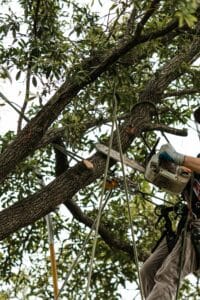
Following ANSI A300 often changes how crews work near structures and utilities on a property in Fort Worth or Midlothian. Crews manage falling branch paths and select cuts that reduce future storm damage near roofs and lines. If pruning involves safety risk, professionals will use ropes and other controls to protect people and property. When in doubt about a recommended cut, ask the arborist to explain the benefit and any long-term effects.
How ANSI A300 Pruning Works And Why It Matters
ANSI A300 Pruning guides the step-by-step decision making arborists use on each tree to balance safety and health. Professionals start with a clear goal for the crown based on tree species, structure, and site constraints. They then pick cutting locations that preserve bark and cambium to help the tree seal wounds more quickly. This process reduces the chance of large exposed wounds that invite decay and pests.
Inspectors follow a routine of visual checks and simple measurements before any cut is made. They assess branch attachment quality, measure branch diameters, and look for signs of internal decay with a probe or careful sounding. Climbers also examine trunk and scaffold limbs for included bark and weak crotches that increase failure risk. These diagnostic steps produce photos and notes that explain recommended actions to the property owner.
Cutting techniques under the standard favor selective removals over aggressive thinning that can stimulate weak regrowth. Pruners choose pruning points near the branch collar rather than leaving stubs or making flush cuts that harm the collar tissues. Crews also sequence cuts to control falling wood and limit bark tearing toward the trunk. For homeowners in Fort Worth, this staged approach reduces risk to roofs, gutters, and outdoor equipment during the work.
Proper pruning also considers future tree function and form, not just immediate clearance or view. Arborists plan cuts to encourage strong branch spacing and a stable main stem that can resist storms and heavy leaf loads. For detailed homeowner guidance on what to expect during a pruning visit, read the resource on tree pruning. Homeowners in Midlothian often find the documentation helpful when comparing bids and scheduling follow-up care.
Common Improper Pruning Causes And Tree Responses
Cutting too much foliage at once stresses a tree and forces rapid regrowth of weak, crowded shoots that break easily. Homeowners often notice a sudden flush of long skinny branches after an over-thin, which signals excessive crown reduction. A pro diagnosing this will look for many small-diameter water sprouts and check branch attachment quality with a visual inspection. They may record photos and measure shoot diameters to recommend phased corrective pruning rather than repeating aggressive cuts.
Leaving stubs or making flush cuts damages the branch collar and slows wound closure, inviting decay and pests into the trunk. During inspection, an arborist checks collar condition and probes near wounds to detect early decay pockets or soft wood. If a stump remains, technicians note bark tearing patterns and potential cambium damage that can change nutrient flow. Corrective pruning cuts are planned to remove damaged tissue and preserve healthy collar tissue for faster sealing.
Excessive topping or “rounding over” removes critical scaffold limbs and creates multiple weak leaders that increase failure risk during storms. A professional confirms topping by measuring removed branch diameters and comparing remaining leader structure to species expectations. Homeowners in Fort Worth often report more branch failures after storms when trees were previously topped. Repair plans typically stage reductions and select one or two strong leaders to develop into permanent scaffolds over time.
Random, repeated cutting for clearance near structures or lines can leave uneven growth and niches for pests to enter the tree. Inspectors look for recurring cut sites, included bark, and cavities when diagnosing structural decline on a property in Midlothian. Diagnostic steps include sounding the trunk, probing suspicious cavities, and documenting weak attachments with photos. The resulting recommendation balances needed clearance with techniques that preserve long-term stability and reduce entry points for decay.
Warning Signs Of Poor Pruning And When To Act
Look for fresh, discolored wood or sunken bark near previous cut sites, these signs suggest the tree is not sealing wounds properly. Cracks that run from a pruning wound into the limb or trunk often indicate internal weakness that needs further inspection. A professional will sound the wood with a mallet and probe suspect areas to confirm decay or hollowing. If a limb shows fungal fruiting bodies, act quickly because that points to advanced decay needing assessment.
- Visible new sprouts at many cut points can signal over-pruning.
- Large bark tears toward the trunk show poor cut technique.
- Multiple adjacent wounds increase decay risk over time.
- Lean that develops after pruning suggests altered weight balance.
Examine the crown edge for uneven regrowth and several long, weak shoots that crowd each other after a recent job. A diagnostic step pros take is measuring shoot diameters and checking attachment quality with a close visual inspection. Photos of the crown taken before and after pruning help compare changes and support a written recommendation. Homeowners in Fort Worth should watch for increased limb failures after storms following any suspect pruning work.
Stains, wet pockets, or cavities near cut locations are warning signs requiring prompt attention from an arborist. A technician will map decay, probe cavities, and may use incremental climbing inspection to confirm structural risk. For unsafe hanging limbs or complex removals, crews use controlled drop techniques such as the three-cut method for safe limb removal to prevent bark tearing and property damage. Residents in Midlothian noticing these signs should schedule an evaluation rather than attempt corrective cuts themselves.
How Professionals Apply ANSI A300 Pruning Techniques
Pros begin by establishing a clear pruning objective for each tree, such as reducing hazard, improving structure, or clearing utility lines. They record visible defects, measure branch diameters, and map targets before any limb is removed. This planning helps crews decide which cuts will reduce failure risk without causing unnecessary stress. Homeowners benefit when the arborist explains the goal and expected short-term effects on the tree.
When diagnosing a candidate limb, technicians use visual checks and simple tools like a mallet and probe to detect hollowing or decay. Climbers inspect scaffold attachments and look for included bark, then photograph findings for the work plan. This step confirms whether a limb should be shortened, removed, or left to monitor over time. Clear documentation helps homeowners compare options and understand safety trade-offs.
Cut selection follows ANSI A300 Pruning guidance about cut placement near the branch collar to support wound closure and reduce cambium damage. Crews use controlled cutting sequences and rope control to prevent bark tearing and manage falling wood around buildings. For specific cut styles and examples, professionals often reference detailed branch guides such as the resource on branch cutting techniques. Proper sequence and placement protect the trunk and promote faster sealing of wounds.
After pruning, arborists assess the tree for balanced weight and remaining live crown to ensure stability during storms and wind events. They may recommend follow-up visits spaced months to years apart to phase corrective work and monitor regrowth patterns. In Fort Worth properties, crews often stage larger reductions to avoid excessive foliage loss at one time. For Midlothian homeowners, documented observations and a written maintenance schedule clarify long-term care and timing for future pruning.
When Homeowners Should Call A Professional Service
If you see large hanging limbs, deep cavities near major branches, or fractured crotches, call a professional right away. These problems carry medium safety risk and can require rope work and staged removals. A technician will perform a focused inspection with sounding, probing, and photos to confirm internal decay. Do not attempt to remove unstable limbs yourself, call an arborist for a controlled plan.
Schedule a professional evaluation when pruning needs exceed simple trimming for clearance or walkways. Complex structural pruning or multi-season corrective work benefits from a written plan and phased visits. The crew will measure branch diameters, map scaffold limbs, and recommend conservative cuts to protect long-term stability. Homeowners often request a photo report and suggested follow-up timing after the inspection.
Call a pro if prior cuts show bark tears, exposed stubs, or decay spreading from wound sites that worry you. A technician will inspect the branch collars and may use targeted cuts consistent with industry guidance to improve closure. For specific collar-preserving techniques, ask about branch collar cuts during the assessment. In Fort Worth, homeowners commonly need careful sequencing to protect roofs and fences during work.
Ask for a professional when an entire crown seems unbalanced after recent pruning or storm damage has left large missing limbs. The arborist will check live crown ratio, attachment quality, and lean to decide if reduction or removal is safest. For properties in Midlothian, scheduling sooner reduces the chance of further storm-related failures. If safety concerns exist, prioritize an on-site evaluation rather than delay action.
Preventive Pruning Practices To Prolong Tree Life
Start preventive pruning with a clear schedule based on species growth and site conditions rather than reacting to visible problems. Inspect the crown for crossing branches, narrow crotches, or competing leaders as part of routine checks. A professional will measure branch diameters and record photos to plan phased work over several seasons. Homeowners in Fort Worth can use these records to compare changes and confirm the timing of future cuts.
- Remove small crossing branches early.
- Thin crowded areas to improve light and air flow.
- Select one strong leader where multiples compete.
- Cut deadwood back to sound wood.
- Space follow-up visits to avoid over-pruning.
Use small, frequent pruning windows to avoid removing more than twenty-five percent of live crown in one visit. This phased approach reduces stress and limits the tree’s need to produce weak, rapid regrowth. A pro inspects attachment points and may use a mallet or probe to confirm sound wood before recommending removal. In Midlothian, phased pruning helps reduce the chance of storm-related failures by improving branch structure gradually.
Protect young trees by guiding scaffold selection early and keeping main stems clear of wounds and collars. Structural pruning on newly planted trees sets future strength and reduces the need for large corrective cuts later. For homeowners planning early-stage care, review guidance on structural pruning for newly planted trees to learn recommended cuts and timing. Regular small adjustments save money and preserve tree life over decades.
Choosing A Qualified Arborist And What They Check
Ask for credentials such as ISA certification or proof of professional arborist training, and verify references from recent clients. Request a written scope that explains inspection steps, recommended cuts, and the expected follow-up schedule. During the estimate, a qualified arborist should record branch diameters, note included bark, and photograph suspect areas for documentation. If work involves safety risks, expect a clear plan describing rope control, drop zones, and protective measures for nearby structures.
Watch how the arborist diagnoses problems on-site: they should sound limbs with a mallet, probe cavities, and climb for close visual checks when needed. A good inspector will explain findings using photos and simple diagrams so you can see decay locations and attachment concerns. Ask specifically whether proposed cuts follow ANSI A300 Pruning principles and how those cuts reduce long-term failure risk. Professional reports often include recommendations for phased pruning to avoid removing too much live crown at once.
Request proof of insurance and confirmation the crew follows safety procedures, since medium-risk removals require trained climbers and rigging. During the walkthrough, note whether the arborist identifies utilities, weak anchors, and potential falling paths toward fences or roofs. For homeowners in Fort Worth, clarify how the crew will protect gutters and outdoor equipment during crown work. If the inspector suggests corrective work, ask for a timeline and measurable goals for improved branch spacing and attachment strength.
Compare at least two written bids that list specific cuts, estimated crown reduction percentages, and follow-up visit timing before deciding. Avoid hiring anyone who promises quick fixes like topping or excessive crown thinning without documentation of long-term benefits. If you see repeated poor methods in past photos, review the common mistakes guide to learn what to avoid and ask targeted questions. For properties in Midlothian, use the documentation to schedule phased work that balances safety, tree health, and budget over several seasons.
Frequently Asked Questions
What is ANSI A300 pruning and why does it matter?
ANSI A300 Pruning is a set of industry standards that define proper pruning practices for tree health and safety. It guides pruning cuts, timing, and branch removal to reduce pest, disease, and decay risks. Following these standards helps arborists preserve structure, improve wound closure, and extend a tree’s useful life. Pruning can be hazardous, so if a tree poses risk or requires large cuts, hire a qualified professional.
How do pros inspect a tree before pruning?
A certified arborist walks the property, noting tree species, size, and past wounds visible on trunks and major limbs. They check branch attachments, included bark, decay signs, and root crown visibility to judge structural risk. The pro uses tools like binoculars, a probe, and sometimes a moisture or sounding test to confirm decay or hollow areas. If climbing or cutting near power lines or heavy limbs is needed, caution and hiring a qualified professional are essential for safety.
Will ANSI A300 pruning harm my tree’s growth?
When done according to ANSI A300 Pruning standards, pruning supports healthy growth by removing dead or crowded branches without cutting too much live tissue. Improper cutting or overpruning can stress trees, reduce leaf area, and invite pests or decay. If pruning involves large limbs, height work, or wound treatments, use caution and hire a qualified arborist to avoid hazards. A pro will inspect branch structure, callus formation, and cambium response to confirm the work helped rather than harmed the tree.
What signs show a previous prune was done poorly?
Look for large stubbed branches, flush cuts, or wounds with ragged bark that did not heal over properly. Multiple closely spaced cuts or topping cuts often cause weak regrowth and crossing branches. Excessive thin crowns or large exposed roots after pruning indicate over-pruning and long-term stress. If cuts are old and the tree shows decay, fungal fruiting bodies, or unstable limbs, exercise caution and hire a professional arborist.
When should I call an arborist after pruning damage?
Call an arborist if you see large torn limbs, deep bark wounds, or exposed wood after pruning damage. If leaves wilt, drop heavily, or new growth stalls, schedule an inspection within a week. If the tree leans suddenly or major limbs crack, treat the situation as hazardous and contact a professional immediately. A certified arborist can assess damage, recommend remedies consistent with ANSI A300 Pruning, and reduce further risk to people and property.