

Canopy Risk Triage for Safer Yards Near Structures
Key Takeaways About Canopy Risk Triage
Canopy risk triage ranks tree defects by how likely they will fail and what they would hit. This guidance is for homeowners and property managers when urgent safety or staged work matters.
- Identify dead wood and cracks over roofs and play areas first
- Prevent accidents by clearing hanging limbs that threaten people
- Avoid overcutting by matching cuts to defect severity and target
- Spot fungal fruiting bodies bark loss and widened seams quickly
- Reduce strike force with targeted short cuts and directional pruning
- Plan staged work using photos probe notes and prioritized lists
Introduction
Canopy risk triage helps homeowners reduce danger from trees near structures without unnecessary pruning. Overhanging branches above a roofline or chimney pose clear risks to people and property. Trees dropping limbs into play areas create ongoing liability and stress for families. Prioritizing cuts by defect severity targets the most dangerous issues first.
Many yards have multiple concerns but limited time or budget to address them all. A single dead limb over a walkway represents a higher immediate threat than non-structural thinning on the back fence. Homeowners in Fort Worth often notice roofline overhangs first because leaks and debris show up fast. For properties in Mansfield, play areas and utility clearances commonly guide which cuts come first.
Risk increases when defects sit over high-value targets like roofs, vehicles, or children’s spaces. Rotten wood, wide cracks, and fungal fruiting bodies are visual signs that raise a branch’s priority. Visible bark loss or recent limb failure also shifts a decision toward removal. Professionals weigh those symptoms against the target beneath to recommend focused action.
Quickly reducing the highest risks limits damage while preserving healthy canopy where possible. A measured approach prevents overcutting and maintains shade, privacy, and tree health. If defects suggest medium or high danger, contacting a professional is the safest next step. An expert can confirm severity and recommend the minimal effective cut to protect the property.
What Canopy Risk Triage Means For Homeowners
Canopy risk triage means ranking tree defects by how likely they are to fail and what they would hit if they fell. This process helps homeowners decide which cuts reduce danger fastest. A common homeowner question is whether a visible crack means urgent removal, and the answer depends on how large the crack is and what sits beneath it. If a cracked limb sits over a roof or play area, it often becomes a higher priority for action.
- Inspect for dead wood above occupied spaces.
- Look for fungal fruiting bodies on trunks or branches.
- Note cracks, seams, or wide branch unions.
- Map targets beneath the canopy to set priorities.
Homeowners can think in terms of targets and failure likelihood to avoid unnecessary cuts. A small defect over an empty lawn may wait, while the same defect over a driveway may not. Professionals use simple mapping tools to pair defects with targets and set a risk ranking. That approach reduces overcutting while focusing resources where they matter most.
Diagnosing severity starts with visual checks and simple tests a pro would perform on site. They will inspect branch unions, probe suspected rot with a screwdriver, and note fruiting bodies and bark loss. For quantified plans, crews commonly create a branch-risk map to show which limbs need immediate work and which can be monitored. If you see sudden canopy changes or hear unusual cracking sounds, contact a professional for a confirmed assessment.
In Fort Worth and Mansfield, homeowners often balance shade value against structural risk when choosing cuts. A triage plan lets them preserve shade and privacy while removing serious hazards near roofs and play areas. This focused method improves safety without removing more tree than necessary. Scheduling a professional inspection is a practical next step when medium or high risks appear.
Common Structural Causes And Why It Happens
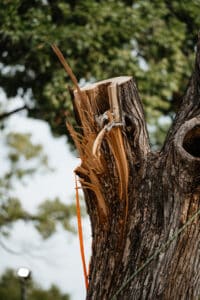
Branches split from weak unions, included bark, and narrow crotches often lead to progressive structural failure. Decay fungi digest wood from the inside, creating hollow areas that look sound externally. Heavy limb weight combined with decay increases the chance of sudden failure during wind or storms. Homeowners in Fort Worth may notice leaning leaders or widened seams where these problems start.
Root decay and root plate failure change how a whole tree carries load, causing lean or uplift at the trunk base. Compacted soil and mechanical damage to roots reduce anchorage over time and make a tree more likely to topple. Signs include widening root collars, recent tilting after rain, and cracks in the trunk flare. For properties in Mansfield, shallow roots near hardscapes can concentrate risk near play areas and structures.
Crown imbalance from prior heavy pruning or asymmetric growth creates stress on remaining limbs that can lead to breakage. Thinned crowns exposed to sudden wind gusts may fail because smaller remaining branches bear more load. Professionals inspect branch attachment points, measure decay depth with a probe, and check for fungal fruiting bodies. A focused trimming program, such as hazard limb trimming, removes the few most dangerous limbs while keeping the crown functional.
Storm damage and past limb failures create hidden defects like internal cracks and weakened branch collars that worsen with time. A pro diagnoses these by sounding limbs with a mallet, probing suspect areas, and photographing defects for a written report. They compare defect location to targets beneath to decide whether removal, pruning, or monitoring is best. When defects sit over roofs, vehicles, or play spaces, quick targeted action reduces immediate risk without excessive cutting.
Identifying Warning Signs In Roofline Overhangs
Start by scanning roofline overhangs for subtle signs that precede failures, such as small drops of sap, fine cracks, or new bark separation. Look along the underside of overhanging limbs for discoloration or soft wood where rot begins but is not yet obvious. A professional will follow these cues with a hands-on check of branch collars and the union to confirm decay or weakness. If you see fungal fruiting bodies near the roofline, treat that as a higher priority for inspection and possible hazard cut.
Next, note mechanical damage and recent wound patterns where branches rub or strike the roof edge during wind events, which can widen over time. Examine gutters and roof valleys for concentrated debris accumulation that signals repeated minor failures above. A pro diagnosing the issue will probe suspect wood with a screwdriver and inspect attachment angles before recommending a targeted removal. Concrete evidence like bark loss over a long seam raises concern even without visible canopy dieback.
Inspect how loads transfer on long overhangs by observing branch lean and taper toward the roof, longer, heavy limbs create higher failure risk. Professionals often measure limb diameter at the root of the defect and photograph the angle to estimate potential swing and strike radius. They may also map the limb path relative to roof features and chimneys to prioritize cuts that lower impact force. For Fort Worth homeowners, these visual checks help decide whether a quick hazard trim or a more involved removal should come first.
When siblings of a defective limb show similar growth patterns, treat them as linked risks rather than isolated concerns to avoid surprise failures. A careful pro will recommend removing only the few at-risk limbs to maintain shade while protecting structures and play areas. Homeowners in Mansfield should report any recent increases in fruiting bodies or bark loss so inspectors can compare past photos during diagnosis. If you are unsure after your visual check, contact a professional who can confirm defect severity and propose focused corrective cuts.
Prioritizing Hazard Cuts By Defect Severity
Start by ranking defects by immediate danger to people and structures, not by how ugly they look. Focus on limbs directly above occupied targets like walkways, roofs, and play areas first. Compare visible decay, wide cracks, or hanging dead wood to nearby targets to set order. Use measurable cues such as limb diameter and attachment angle to make clear choices.
- Remove hanging dead wood over play areas first.
- Address large cracked limbs over roofs immediately.
- Trim rubbing branches that damage gutters next.
- Monitor small limb rot away from targets for now.
Professionals often assign high, medium, or low priority to each defect during a quick site triage walk. They document limb diameter, probe results, and target location to justify the priority. This record helps homeowners choose staged work while avoiding unnecessary canopy loss. A focused plan preserves shade and reduces immediate hazards efficiently.
When a limb sits over a roofline, consider specialized overhang techniques to limit removal while clearing risk. Inspectors may use directional pruning or short hazard cuts to lower strike force without removing whole limbs. For specific roof-edge methods, refer to the company’s guidance on overhang control. These options reduce impact on tree form while protecting structures.
Homeowners should expect a professional to confirm priorities with hands-on checks like probing, sounding, and photographing defects. In a common situation, a pro will probe a suspicious seam and photograph a decay pocket, then recommend a targeted cut. That evidence-based approach supports decisions and schedules staged work. For Fort Worth and Mansfield properties, this method keeps urgent risks addressed first and lower risks monitored safely.
Targeting High Risk Areas Around Play Spaces
Families place high value on play spaces, so focus cuts where children run, climb, and gather first to lower immediate danger. Inspect for any hanging deadwood directly above play equipment and seating, since those pieces fail without warning. A professional will note limb diameter and exact fall path to estimate impact energy and required removal. If multiple limbs share a weak union near a play area, plan cuts that remove the linked risk while leaving healthy canopy where possible.
Check for codominant stems and narrow branch unions near play zones, which create sudden failure points under load or wind. A trained crew can mitigate those conditions using selective removal and reduction cuts, as detailed in their codominant mitigation guidance. Look along the swing radius of playground equipment for signs of previous strikes or fresh bark wounds indicating repeated impacts. When visible decay exists within the swing zone, prioritize removal or reduction to eliminate the chance of a heavy strike.
Position of targets under the canopy changes priority: a small rotten limb directly over a sandbox is higher risk than a larger sound limb over gravel. Accurately mapping these targets helps crews stage work to protect the most used areas first, often requiring shorter cuts to lower swing rather than full removals. Photographs and probe findings serve as a record to support those decisions and to explain why specific cuts matter. Homeowners can also request that crews protect play surfaces and move equipment before work begins to reduce collateral damage.
Timing of work matters when children use the yard daily, schedule high-priority cuts when play areas will be empty to avoid exposure to falling debris. For properties near busy neighborhoods in Fort Worth, act quickly on limbs that could reach the street or sidewalk when they fail. In Mansfield yards, focus on root-socket disturbances around play areas that could cause leaning during storms and complicate crown stability. If you detect medium or high risk signs, contact a professional to diagnose severity and plan targeted cuts without overcutting healthy canopy.
How Professionals Assess Risk And When To Call
A certified arborist or experienced crew starts by mapping targets under the canopy and noting immediate hazards relative to those targets. They perform hands-on checks such as probing suspect wood with a screwdriver and sounding limbs with a mallet to detect internal decay. Inspectors record limb diameter, attachment angle, and proximity to roofs or play equipment to quantify urgency. This evidence guides whether a targeted hazard cut or more extensive work is needed without removing healthy structure.
Next, a professional will test stability of codominant stems and narrow unions by checking for movement at the branch collar and looking for included bark. They may use an infrared camera or moisture meter when suspect areas suggest hidden decay, then compare readings to visual cues. Photographs and written notes form a simple report that homeowners can review when deciding staged work. That documented approach reduces unnecessary cuts while focusing on safety.
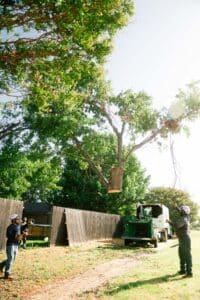
When fall paths cross high-value targets, crews plan directional cuts and staged lowering to control where large pieces land and minimize property damage. Crews also size up the swing radius to estimate impact energy and select removal methods that reduce strike force to roofs or play areas. For some trees, selective canopy work like thinning is chosen to lower wind load and lessen future failures, homeowners can learn more about these plans in the company’s canopy thinning guidance found here: canopy thinning. Clear planning avoids overcutting while addressing immediate dangers.
Professionals recommend calling when you notice new cracks, sudden leaning, or repeated fungal fruiting bodies on main limbs near occupied areas. If a limb makes cracking sounds during wind events or if bark separation increases rapidly, schedule an inspection promptly to confirm severity. In Fort Worth, rapid post-storm checks often uncover urgent failures needing quick triage. For Mansfield properties, repeated root heave or tilting near play zones should trigger a professional assessment without delay.
After diagnosis, the crew will explain options with expected outcomes, including monitoring, targeted hazard cuts, or full removals when necessary for safety. They clarify short-term actions to reduce immediate risk and longer-term steps to maintain canopy health and structure. Homeowners receive a prioritized list with the recommended timing for each cut so they can budget and stage work. This transparent plan supports safety while avoiding unnecessary loss of tree canopy.
Quick Onsite Steps Homeowners Can Safely Take
Start by clearing immediate pedestrian paths and play areas of small dead branches you can reach safely from the ground. Wear eye protection, gloves, and sturdy shoes while removing loose debris and small hanging twigs that present trip or eye hazards. Do not climb trees, use ladders near power lines, or attempt large limb removals, these are tasks for professionals. If you notice fresh cracking sounds or sudden new bark loss, stop work and arrange a professional inspection promptly.
- Wear protective gloves and eye protection.
- Remove small loose debris from paths.
- Cut only low-hanging twigs within reach.
- Keep children and pets away during cleanup.
Next, snap photos of concerning limbs from several angles to document defects and fall paths for a pro to review. Measure or estimate limb diameter and note which roof, vehicle, or play area lies beneath to help prioritize cuts. These simple records speed a professional diagnosis and reduce time spent on site confirming what you observed. For guidance on staged removal and swing-control techniques, ask the crew about limb reduction and clearance.
If a limb appears unstable but sits over a roofline, create a clear exclusion zone beneath it and avoid parking vehicles there until a pro assesses risk. For yards in Fort Worth, post-storm checks that limit access under damaged branches can prevent accidents. In Mansfield properties, keep play equipment cleared and avoid using swings within potential fall zones until professionals confirm safety. These temporary measures reduce exposure without altering healthy canopy unnecessarily.
Long Term Prevention And Maintenance Strategies
Schedule regular follow-up inspections to detect progressive decay or shifting hazards before they reach critical severity. A professional will check attachment points, root collars, and crown balance during these visits to spot slow changes. Keep a simple calendar reminder tied to seasonal checks after heavy storms or high winds to catch new defects. This steady rhythm reduces surprises and limits the need for emergency removals.
Adopt targeted cultural practices that strengthen trees without heavy trimming, such as mulching and correct watering near the root zone. Avoid soil compaction and mechanical damage around trunks to preserve root anchorage and lower overthrow risk. Inspect irrigation placement and adjust so roots receive deep, infrequent watering rather than surface saturation. These steps support structural resilience while keeping canopy intact.
Use a basic monitoring log with photos and brief notes to track changes in problematic limbs and unions over time for informed decisions. A pro can compare your photos to on-site probe and sounding results when creating a formal plan. Refer to a tree-structure analysis report when planning staged interventions to avoid unnecessary cuts and maintain safety. If you notice sudden cracking sounds or rapid bark separation, contact a professional immediately for confirmation.
Plan maintenance in stages to spread cost and preserve tree form, addressing highest-risk items first while scheduling lower priorities later. Coordinate pruning during dormancy when possible to reduce sap loss and better observe branch structure after leaf drop. For Fort Worth properties, time work to avoid peak summer stress on trees and reduce shock from pruning. In Mansfield, phase work to protect play areas during school breaks or low-use seasons.
Train household members to recognize early warning signs like small fruiting bodies, new vertical cracks, or branch movement during breezes, then report them for inspection. Share photos and measurements with a professional so they can prioritize work without unnecessary site visits. Maintain clear exclusion zones under concerning limbs until a professional completes targeted cuts or confirms safety. Regular communication and simple records make long-term canopy safety manageable and precise.
Frequently Asked Questions
How does canopy risk triage decide what to cut first?
Canopy risk triage prioritizes cuts by combining defect severity with the target beneath, such as roofs, vehicles, or play areas. Inspectors look for cracks, decay, hanging limbs, and lean to rate immediate failure risk. Teams address high-risk defects over critical targets first and use smaller cuts near low-risk areas to avoid overcutting. If a cut involves structural or high branches, use a professional arborist because climbing and large removals carry significant danger.
Which tree defects pose the highest danger near roofs?
Large dead limbs and standing dead trees near a roof pose immediate collapse risk and should rank highest in canopy risk triage. Cracks or splitting in major crotches and co-dominant stems can fail suddenly under wind or heavy rain. Root rot or significant lean toward the house increases whole-tree failure likelihood and needs urgent attention. Exercise caution and contact a professional arborist or tree service to inspect and perform hazard cuts safely.
When should play areas trigger immediate hazard cuts?
Cut immediately when branches show fresh cracking, large hanging dead limbs, or lean toward play equipment where failure would hit children. Visible fungal fruiting bodies, deep trunk cavities, or root heave beneath the play area warrant urgent hazard cuts. Use canopy risk triage to prioritize cuts that remove direct targets first and avoid unnecessary pruning. For medium or high-risk findings, exercise caution and contact a professional arborist to assess and perform the work safely.
What simple checks do pros use to confirm a defect?
A pro first looks for visible decay, such as soft wood, fungal fruiting bodies, or darkened, crumbly bark near targets. They check branch attachment angles, included bark, and recent crack patterns that indicate imminent failure. Simple tools like a mallet, moisture meter, and binoculars help confirm hollowing or high moisture without intrusive cuts. If a tree near a roofline or play area shows these signs, stop and call a professional because climbing or large cuts create safety hazards.
How can I prioritize multiple risks without overcutting?
Start by mapping defects and targets, scoring each by severity and potential impact on structures or people. Use a simple ranking: immediate hazards near rooflines or play areas come first, followed by canopy encroachments. Apply canopy risk triage to group similar cuts and avoid removing more live canopy than needed. If any cut involves large limbs near roofs or power lines, exercise caution and call a professional for safe assessment and removal.