


Branch Silhouette Tuning for Balanced Lines and Clearance
Key Takeaways About Branch Silhouette Tuning
Branch silhouette tuning is selective pruning that reshapes outer limbs to balance a tree and maintain safe clearances. This guidance is for homeowners and property managers when uneven growth or proximity to structures creates risk or maintenance issues.
- Identify heavy or lopsided limbs that change canopy balance.
- Prevent rubbing and repeated debris buildup on roofs.
- Avoid sudden large removals by using staged reductions.
- Spot signs of decay or included bark before cutting.
- Reduce wind leverage by thinning and shortening outer shoots.
- Plan follow up inspections to monitor wound closure and regrowth.
Introduction
Branch silhouette tuning matters when uneven limbs throw a tree’s shape off balance and create unsafe clearances near roofs and power lines. Homeowners often notice heavy-looking sides or branches brushing gutters after storms or steady growth. Those uneven profiles increase wind sway and rubbing that can tear bark and invite decay. Addressing the silhouette reduces those risks while keeping a tree visually balanced in the yard.
A refined cut changes how weight distributes across the canopy and how each limb finishes against the sky. Small, deliberate removals shift the visual line and reduce leverage on weak attachments. When branches sit too close to homes or wires they raise safety and maintenance concerns for residents. Fort Worth property owners especially notice these issues on large, established trees near older houses.
Professionals assess branch shape by looking at taper, branch collars, and how secondary stems align with primary limbs. They check for crossing branches, heavy epicormic growth, and signs of included bark that concentrate stress. Observations like bark tears or rubbing paint a clearer picture than size alone. Mansfield homeowners dealing with repeated gutter clogs or roof strikes often spot these cues first.
Refining a branch silhouette focuses on balance not just removal so the tree retains function and form. The goal is predictable clearances for people and structures while supporting healthy wound closure. Proper cuts aim to leave strong branch collars and maintain the tree’s natural growth rhythm. When in doubt about safety or structure, contact a professional to inspect and diagnose before any work begins.
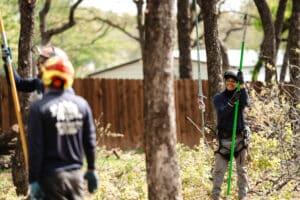
What Branch Silhouette Tuning Means For Homeowners
Branch silhouette tuning means selectively reshaping outer limbs so a tree looks balanced and keeps safe clearances from structures. Homeowners often ask whether tuning removes large limbs or just trims tips, and the short answer is targeted shaping rather than wholesale removal. A clear homeowner concern is whether tuning reduces future rubbing or gutter clogs, and it often does by redirecting growth and lowering leverage on weak joints. Professionals use this work to preserve canopy health while improving sight lines and access around the house.
- Reduces branch-to-roof contact.
- Limits rubbing that causes bark loss.
- Improves wind resistance on the canopy.
- Makes inspections and maintenance safer.
Homeowners will notice visual cues like lopsided crowns, heavy outer limbs, or branches that point toward structures. A common homeowner question is how long benefits last, and outcomes vary with species and follow-up pruning every few years. Inspectors look at branch taper, attachment angle, and existing decay to decide which cuts will correct the silhouette. Simple measurements like branch length ratios and visible wound closure guide the plan.
Professionals confirm needs by climbing or using pole pruners to test limb flexibility and by recording photos of problem areas for comparison. They also evaluate nearby clearances relative to rooflines and utility lines before cutting. For guidance on specific cutting methods used during tuning, refer to the page on branch cutting techniques for proper cuts that preserve collars and reduce decay. If you see significant cracks, bark tears, or large included bark seams, contact a professional because safety risks increase and require expert assessment.
How Branch Silhouette Tuning Works And Why It Happens
Technicians begin by mapping the outer crown to see which cuts will change the visual line without creating new stress points. They record photos and measure branch length and diameter to compare sides and plan removal weight. A balanced silhouette often requires multiple small reductions instead of one large removal to avoid sudden load shifts. For homeowners in Fort Worth, TX, this staged approach reduces the chance of unexpected limb failure during storms.
Inspectors look for asymmetry in taper and mass distribution to decide where to thin or shorten. They check branch collars and attachment angles to ensure cuts will heal properly and not invite decay. Simple tests include flexing secondary stems with a pole to judge live wood strength and taking photos for before-and-after comparison. In Mansfield, TX properties, these checks help confirm that clearance goals won’t compromise structural integrity.
When cutting, crews follow a sequence that preserves primary scaffold limbs while removing or reducing competing leaders and heavy outer weight. The strategy centers on shifting load toward strong, well-attached branches and keeping canopy airflow for quicker wound closure. Professionals may pair reductions with selective thinning to lower sail area and reduce wind leverage on weakened attachments. For situations that require limiting branch length near structures, see the guidance on limb reduction, clearance, and risk control for common approaches used in the field.
Diagnosis includes documenting symptoms like leaning crowns, uneven leaf density, or repeated branch failures to confirm tuning is needed. A climber or arborist inspects for hidden decay in crotches and uses measurements to predict post-cut balance. They provide a written plan that notes cut locations, expected weight shifts, and follow-up intervals for rechecks. If any step reveals significant risk, homeowners should hire a professional rather than attempt large corrective cuts themselves.
Common Causes Of Unbalanced Branch Profiles
One common cause of unbalanced branch profiles is dominant lateral growth where one side repeatedly outpaces the other, creating uneven mass and wind loads. This happens when light or space favors certain limbs and the tree directs more growth toward them over several seasons. Homeowners often spot this as a heavy-looking side after annual growth spurts or when one leader outgrows adjacent scaffolds. A professional inspects branching rhythm and measures relative diameters to decide which laterals need reduction.
Another frequent driver is suppressed inner growth that forces outer shoots to elongate and thin, producing a rim-heavy crown prone to failure. Shade from nearby trees or structures can cause this pattern, altering leaf density and cambial activity on specific limbs. Technicians check for live crown ratio changes, thin outer shoots, and may rebalance weight with targeted reductions rather than full removals. Observation of leaf density and branch flexibility helps confirm whether reductions will restore balance.
Past corrective cuts left too close to the collar or many stubs can also distort the silhouette by encouraging epicormic sprouts and weak attachments. Those sprouts add lightweight mass at the edge but attach poorly, increasing future failure risk under wind or ice. Inspectors look for clusters of water sprouts and included bark at previous wounds to determine if rework or selective removal is needed. A measured plan often combines thinning of sprouts with careful heading cuts to improve attachment angles.
Asymmetric storm damage and root loss alter load distribution and can leave one side heavier or structurally compromised long term. Roots damaged by construction or soil compaction reduce anchorage and shift leverage to remaining branches, causing progressive imbalance. Pros evaluate root flare, soil heave, and previous wound patterns while planning corrections, sometimes using staged reductions to avoid sudden imbalance. For cases where weight redistribution is needed, crews reference practices like branch weight balancing to guide cut sequencing and follow-up inspections.
Species-specific growth habits also create recurring asymmetry when certain trees favor upright or pendulous forms, demanding different tuning approaches. Knowing species tendencies helps decide whether to shorten leaders or thin lateral clusters for lasting symmetry. Professionals may record diameters and photos to monitor whether cuts achieved the intended visual line over multiple seasons. Homeowners in Fort Worth, TX and Mansfield, TX with species that lean toward uneven profiles should plan periodic checks to maintain safe clearances.
Warning Signs Of Unsafe Branch Clearance Issues
Look for fresh bark tears, hanging shards, or long, split limbs that show recent structural failure and need immediate attention. Visible cracks at crotches or sudden crown lean often signal internal decay or root instability. If branches suddenly sag after a storm, document photos and avoid standing under the canopy until assessed. A professional inspection can confirm internal rot using sound testing and close visual checks of branch collars.
- Repeated gutter clogs from the same limb.
- Branches consistently contacting the roof edge.
- New vertical splits in large limbs.
- Lean developing at the main trunk.
Another warning is progressive thinning on one side while the opposite side thickens, which changes wind load and failure risk. Inspectors check taper, measure diameter changes, and probe suspicious wood with a nonpowered tool. For homeowners in Fort Worth, TX this imbalance can become dangerous during high winds and should be evaluated promptly. Recorded photos and measured diameters help pros decide whether staged reductions or removals are safer.
Watch for clusters of weak new shoots at old cut sites or included bark in unions that reduce attachment strength. A technician will gently flex limbs, look for movement at the union, and note any soft or discolored wood. If branches sit near power lines or roofs, do not attempt cuts yourself, contact a professional for safe clearance work. Preliminary risk mapping often guides the sequence of cuts and is documented for follow-up inspections.
Insect galleries, fungal fruiting bodies, or soft spongy wood under bark are signs of decay that compromise clearances and safety. A professional will use a visual inspection and sounding techniques to locate hollows or decay pockets within larger limbs. For properties in Mansfield, TX, repeated incidents of limb failure near structures justify a formal risk assessment. The assessment typically results in a written plan noting high-risk limbs and recommended action timing.
Refining Cuts For Symmetry And Structural Balance
Start by pruning toward strong secondary branches to shift weight without removing main scaffold limbs, keeping overall stability intact. Professionals use measured heading cuts and selective thinning to change the visual line while preserving attachment strength. They often schedule cuts in stages so the tree adjusts slowly and closure proceeds between sessions. Homeowners in Fort Worth, TX may notice immediate change in canopy sway after a staged reduction.
Technicians check branch taper, branch collars, and attachment angles before refining any cut to avoid creating new weak points. A common diagnostic step is flexing candidate laterals with a pole to confirm live wood and proper response under load. Photographs and diameter measurements at cut sites record progress and predict post-cut balance over time. For limbs that hang over roofs, crews coordinate reductions with overhang-control plans to protect structures.
When reducing heavy outer lengths, crews often pair shortening with thinning of lateral shoots to maintain airflow and reduce sail area. This combination lowers wind leverage and speeds wound callus formation, improving long-term structural balance. Specialists also avoid leaving stubs and follow collar-preserving techniques to minimize decay entry. For complex weight shifts, they reference balanced cut trimming methods to sequence removals safely.
A pro will confirm success by comparing before-and-after photos, re-measuring diameters, and observing crown movement during a test wind event. They may recommend a follow-up visit in one season to check wound closure and any new epicormic growth. If new weak attachments form, further selective reductions or corrective cuts will be planned. Mansfield, TX homeowners should expect periodic tuning for species that produce vigorous watersprouts.
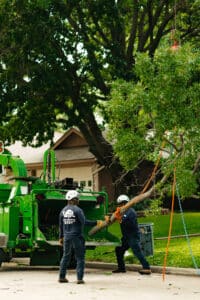
When To Call A Professional For Branch Silhouette Tuning
Call a professional when cuts will cross into high-risk zones near roofs, power lines, or frequently used areas where failure could cause injury. A trained crew will evaluate attachment strength, decay presence, and root stability before work begins. They use controlled removal plans when cuts could shift loads or expose hidden weaknesses in the canopy. For homeowners in Fort Worth, TX, prompt professional assessment reduces the chance of emergency removals after storms.
If the work requires climbing, heavy rigging, or staging to lower large sections, hire an expert rather than attempt DIY. Professionals follow safe removal sequences and often use the three-cut method for safe limb removal when detaching heavy limbs to avoid tearing bark or creating dangerous falls. They bring proper harnesses, ropes, and lowering systems to control drop zones and protect structures below. Observing equipment and setup gives homeowners a clear sense of the job’s complexity and risk.
Consider a pro when you notice internal decay signs, such as fungal fruiting bodies or soft wood, near candidate cut sites because hidden rot changes how cuts affect balance. A technician will probe suspect wood, measure remaining sound wood, and document findings with photos to make a safe plan. They may recommend staged reductions to avoid sudden weight shifts that could overload remaining attachments. This diagnostic approach helps prioritize which branches require immediate action and which can wait for routine tuning.
Engage professionals when multiple corrective cuts are needed across the crown to achieve a balanced silhouette without compromising structure or health. Experts sequence the work to maintain scaffold integrity and limit epicormic sprouting that can complicate future maintenance. They provide a follow-up schedule and notes on wound closure and expected regrowth, supporting long-term canopy care. Mansfield, TX homeowners often find this planned approach keeps clearances predictable and reduces emergency visits.
Preventive Pruning Strategies To Maintain Clearance
Create a seasonal schedule that targets outer growth in late winter and mid-summer to prevent limbs from encroaching on roofs. Timing cuts when trees are dormant or after spring flush reduces stress and limits heavy epicormic response. Rotate attention among scaffold limbs so no single side loses too much mass at once. For Fort Worth, TX homeowners this steady rhythm prevents sudden load shifts before storm season.
- Inspect branch ends quarterly.
- Remove competing leaders selectively.
- Thin inner canopy lightly each cycle.
- Shorten long laterals near structures.
- Document cuts with photos for follow-up.
Use conservative heading to shorten limbs instead of full removals when maintaining clearance near sensitive areas. That approach reduces wound size and helps the tree redirect growth without creating large open wounds. Professionals often combine small reductions with targeted thinning for long-term stability. Refer to the guidance on branch thinning for examples of spacing and thinning intensity.
Monitor regrowth for signs of vigorous watersprouts or included bark and address them early before they become heavy hazards. A quick inspection after the first growth season reveals whether cuts triggered unwanted shoots or changed attachment angles. If new weak shoots appear, remove them selectively rather than broad heading to preserve structure. Mansfield, TX properties benefit from early follow-up to keep clearances consistent.
Keep records of each pruning event with photos, dates, and notes on cut sizes to guide future decisions and pacing. Tracking helps predict when another tuning session is needed based on species response and wound closure rates. Bring a professional for any signs of decay or when major sequenced reductions will alter canopy loads. Regular documentation and modest, planned pruning maintain safer clearances and a balanced silhouette over time.
DIY Safety Tips And Tools For Minor Adjustments
Start with a clear plan for minor shaping and identify one or two small limbs to adjust without changing overall load distribution. Wear eye protection, gloves, and a hardhat when working under any canopy that might drop debris unexpectedly. Use a pair of bypass pruners for stems up to one inch and a folding saw for slightly larger branches to keep cuts clean. If a branch sits over a roof or near power lines, stop and contact a professional immediately for safety reasons.
For cuts, make small, conservation-minded removals that preserve the branch collar and avoid leaving stubs that invite decay. A simple diagnostic check is to look for active bud growth and flex the limb gently to confirm live wood before cutting. Keep a tape measure handy to verify you maintain desired clearances from roofs and gutters after each cut. Homeowners in Fort Worth, TX should document adjustments with photos for future comparisons and follow-up decisions.
Stabilize ladders properly and avoid standing on roof surfaces while pruning, use an extendable pole pruner when reach is marginal to reduce fall risk. Inspect your tools for sharpness and secure handles, dull blades tear tissue and slow healing after cuts. Carry out small reductions in stages rather than long single cuts to let the tree adjust and reduce epicormic response. For aesthetic edge work along the canopy, consider methods described in canopy edge finesse to refine lines without heavy removal.
After completing adjustments, clear debris from gutters and roof edges and check for any bark damage that may need monitoring. Record cut locations, diameters, and dates to track wound closure and regrowth in the coming seasons. If you notice decay, persistent sap flow, or new splitting at cut sites, contact a professional for a formal inspection. Properties in Mansfield, TX with recurring regrowth near structures often need periodic follow-up pruning by an expert to maintain safe clearances.
Frequently Asked Questions
How does branch silhouette tuning improve clearance risk?
Branch silhouette tuning removes select crossing and protruding limbs to create predictable clearances from structures and power lines. Carefully placed cuts redirect weight and reduce sail effect, lowering the chance of sudden failures in storms. A trained pro inspects branch unions, canopy density, and target clearances before cutting to confirm risk reduction. If work involves heights near lines or heavy limbs, caution is essential and you should hire a qualified arborist.
When should I schedule branch silhouette tuning each year?
Schedule branch silhouette tuning once or twice a year, typically late winter and midsummer for active growth control and visibility. Inspect after storms or heavy winds and book a tune-up if major asymmetry or hazard appears. Avoid climbing or heavy pruning yourself, cuts near power lines or high branches pose serious risks and require a professional. A certified arborist or experienced crew will assess structure, clearances, and perform safe, balanced cuts to restore symmetry.
Can tuning reduce branches rubbing gutters or roofs?
Yes, careful Branch silhouette tuning can reduce branches that rub gutters or roofs by reshaping branch profiles and removing crossing limbs. Technicians make selective cuts to change branch direction and reduce lateral movement during wind. This work lowers abrasion risk and helps keep gutters clear of leaf and twig build-up. If branches are over the roof or near power lines, avoid DIY work and hire a professional for safety.
What signs show a tree needs silhouette adjustments now?
Look for uneven branch lines that lean toward structures or power lines and create visible clearance gaps on one side.
Notice heavy rubbing branches, crossed limbs, or clusters that create wind catch and risk limb failure.
Watch for increased debris on gutters, frequent light blockage, or branches scraping roofs during wind events.
If branches threaten people or utilities, exercise caution and hire a professional for Branch silhouette tuning and safe removal assessments.
How do professionals diagnose imbalance before cutting?
A professional starts with a visual survey, noting crown weight, asymmetric branch length, and clearance conflicts near structures or lines. They use simple measurements like tape, clinometer, or camera photos to compare canopy balance and identify heavy limbs. During inspection they probe branch attachment, cavity presence, and decay signs to assess failure risk and tuning needs. If any climb or cutting risk appears, they recommend a trained crew and caution homeowners to avoid DIY work near power lines or steep roofs.